






Nest Appearance & Distinction
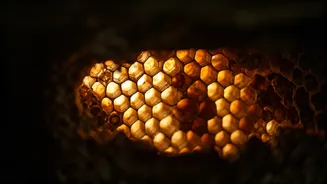
Honey bee nests, often built from beeswax, feature a meticulously arranged honeycomb structure. This internal architecture comprises hexagonal cells, each
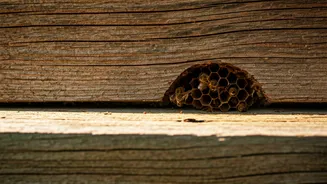
serving a distinct purpose: storing honey, preserving pollen, or nurturing developing bee larvae. While the internal structure is complex, the nest itself may not be externally visible. Often, the only outward sign of a nest hidden within walls or roofs is a small aperture through which bees continuously enter and exit. It's important to differentiate these natural nests from man-made bee hives used for beekeeping. Nests are spontaneous constructions by bees in natural cavities, whereas hives are deliberately crafted boxes managed by humans.
Identifying Nest Clues
Early detection of a honey bee nest relies on noticing consistent, albeit small, indicators. A primary sign is observing bees frequently entering and exiting the same location, suggesting an established colony. You might also hear a persistent, low buzzing sound emanating from within walls, ceilings, or roofs, indicating significant colony growth. Pay attention to small openings, cracks, or vents where bees congregate and ingress. Sticky stains or patches on exterior surfaces can appear if honey or wax leaks through building materials. A sudden and noticeable increase in the bee population around your home is another strong indicator of an active nest nearby.
Preferred Nesting Sites
Honey bees prioritize safety and stability when selecting nesting locations. They seek enclosed, protected spaces that offer a consistent environment. Common spots around homes include cavities within walls, the open areas of attics and roof spaces, and disused chimneys. Sheds and garages also provide suitable shelter. Even trees with natural hollows located in proximity to human dwellings can become nesting sites. Bees are adept at exploiting even the smallest gaps, initiating nest construction with just a minimal opening in a wall or roof.
Nest Construction Basics
The creation of a honey bee nest is a marvel of natural engineering. Worker bees secrete wax from specialized glands on their abdomens, which they then skillfully mold into the characteristic hexagonal cells of the honeycomb. This internal structure is organized functionally: the upper sections are dedicated to honey storage, the middle regions house collected pollen, and the lower parts serve as nurseries for raising young bees. This organized system facilitates efficient colony function and enables sustained growth.
Why Homes Attract Bees
Bees' choice of nesting locations is not arbitrary; it's driven by specific environmental criteria. They actively seek out sites that offer protection from the elements, such as rain and wind, and maintain a stable internal temperature. A quiet, undisturbed environment is also a preference. Proximity to readily available nectar sources, like gardens, is another key factor. Homes frequently meet all these requirements, providing easy access through small cracks, crevices, or unoccupied spaces, making them attractive nesting opportunities for bee colonies.
Potential Nest Dangers
While honey bees are generally not aggressive, they can become defensive if they perceive their nest as threatened. The primary risks associated with a nest near your home include bee stings, especially if the nest is in a high-traffic area. Individuals with bee venom allergies face serious health consequences. Furthermore, accumulated honey and wax can cause structural damage to walls, potentially leading to costly repairs. The presence of a nest can also attract other unwanted insects to the vicinity.
When a Nest is Found
Discovering a honey bee nest requires a cautious approach. For your safety, maintain a respectful distance from the suspected nest area. It is crucial not to obstruct the bees' established flight paths, as this can provoke defensive behavior. Under no circumstances should you attempt to remove or disrupt the nest yourself. The most recommended course of action is to contact trained professionals or experienced beekeepers who possess the expertise to safely relocate or remove the colony.