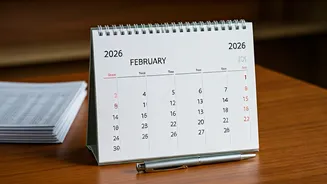

February Bank Holidays
February 2026 will have a number of bank holidays, which will vary based on the state. Financial institutions will be closed on specific dates, impacting
the ability to perform certain transactions in person. These holidays are declared by both the Reserve Bank of India (RBI) and state governments, often to commemorate local festivals or national events. It's imperative to review the holiday schedule for your specific region to plan your banking activities accordingly. Ensure that you have enough cash or utilize digital payment methods, if necessary, in order to overcome any disruption on bank holidays. Consider this in order to ensure you have no issues completing banking activities that are necessary for your everyday life. Remember to always cross-check the official RBI and state government notifications for definitive information. Additionally, the availability of online banking and ATMs will likely remain unchanged, but it is important to take these holidays into account if you plan to do any in-person banking.
Financial Planning Tips
Given the bank holiday schedule, proactive financial planning is crucial. Anticipate potential delays in transactions, and schedule payments, such as utility bills, and loan installments, well in advance of any holiday. Ensure sufficient funds are available in your accounts to cover expenses during these times. Automating payments is a great way to avoid late fees. It's also wise to check your account balances before and after holidays to account for any pending transactions. If you are planning a large transaction, it's wise to plan ahead to avoid possible delays. Reviewing your investment portfolio and making necessary adjustments before a holiday can also be a good practice. Moreover, use this time to organize your financial documents, such as tax returns, bank statements, and investment records. This ensures you are ready for any unexpected financial needs.
Digital Banking Alternatives
With physical bank branches closed, digital banking services become especially critical. Familiarize yourself with your bank's online platform or mobile app to manage your finances seamlessly. These platforms permit you to make transfers, check balances, and pay bills from your home or on the go. Furthermore, UPI (Unified Payments Interface) and other digital payment methods offer efficient and convenient alternatives for transactions. Make certain that your banking apps are up to date and protected with a strong password to ensure security. Before a bank holiday, it is smart to test your apps and digital payment tools to confirm that they are functional. Remember, while digital banking is convenient, it's also important to be cautious of phishing and other online scams. Never share your banking details through unsolicited emails or messages. Use secured networks when conducting financial transactions, and always verify the identity of the recipient before transferring any funds. Staying informed and practicing caution can ensure the safety of your finances.
Review Investment Strategies
February offers a perfect time to reflect on your investment portfolio and assess its performance. Review your investments and evaluate whether they still align with your financial goals. Consider the current market conditions and determine if your portfolio requires rebalancing. Assess the risk level of your investments and make any necessary adjustments to ensure it fits your risk tolerance. It's also an excellent time to consult with a financial advisor to discuss your investment strategy and seek professional advice. Look into diversifying your portfolio across various asset classes, such as stocks, bonds, and mutual funds, to reduce risk. Explore new investment options and stay updated with the latest market trends. Utilize this period to learn more about investment opportunities, perhaps through seminars or online resources. By reviewing your investment plan, you can make informed decisions and optimize your wealth creation strategies.
Tax Planning Considerations
Planning for income tax is something that can be done at any time. Take the opportunity to analyze your tax liabilities and explore options to minimize your tax burden. Review your income and expenses to estimate your taxable income for the fiscal year. Explore tax-saving investments, such as Public Provident Fund (PPF), Equity Linked Savings Schemes (ELSS), and National Savings Certificates (NSC), to reduce your taxable income. Assess your eligibility for various tax deductions and exemptions, such as those related to housing loan interest, medical insurance premiums, and donations. Gather the necessary documents, such as Form 16, bank statements, and investment proofs, to prepare for tax filing. Consider consulting a tax advisor to understand the complexities of tax laws and to make sure that you are compliant with all the guidelines. By having an understanding of taxes, you can plan your financial decisions more effectively.