


The Orbital Debris Dilemma
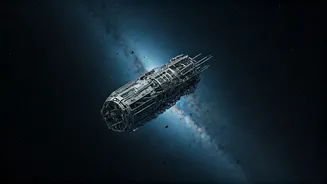
The expanse of space, while vast, is increasingly populated with orbital debris, a significant concern for space exploration. This debris comprises a wide
array of discarded items, ranging from defunct satellites and spent rocket stages to tiny fragments from past missions and even deliberate destruction. Scientists have long sounded the alarm about this growing problem, particularly the potential for Kessler Syndrome. This alarming scenario describes a cascading effect where collisions between debris objects generate even more fragments, exponentially increasing the probability of future impacts and potentially rendering certain orbits unusable. Experts estimate that millions of objects larger than one centimeter are currently in orbit, alongside tens of millions of even smaller, yet still hazardous, particles. These objects are not static; they travel at tremendous speeds, often exceeding 17,500 miles per hour, making them difficult to track and even more challenging to observe directly.
Why Cameras Miss Debris
Despite the sheer volume of space junk, capturing it in photographs, even those taken during high-profile missions like Artemis II, is extraordinarily improbable. The primary reason is size; most orbital debris is simply too small to be resolved by the human eye, let alone clearly depicted by a camera lens. While there's a minuscule possibility of photographing a larger piece of debris, the celestial conditions would need to be exceptionally favorable. The extreme velocities at which both the spacecraft and the debris are traveling create a significant challenge for imaging. Objects zip past at such astonishing speeds that even if a larger piece were in the vicinity, the chance of obtaining a clear, identifiable image is exceedingly low. It’s akin to trying to photograph a fast-moving speck of dust from a speeding train – the motion blur and distance render it practically invisible.
Altitude and Focus Factors
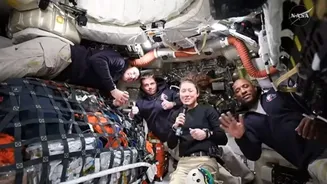
Another crucial element influencing the absence of space junk in photographic records is altitude and mission priorities. The highest concentration of orbital debris is predominantly found in low Earth orbit (LEO), typically residing between approximately 466 and 621 miles above our planet's surface. During the critical initial phases of a space mission, such as the launch and ascent of Artemis II, astronauts are intensely focused on executing complex flight operations and ensuring the safety of the spacecraft. This intense concentration on mission-critical tasks leaves virtually no opportunity to divert attention or camera equipment towards capturing external objects, especially those that are difficult to discern. Furthermore, the spacecraft gains speed rapidly, meaning that even if a relatively large debris object were present, it would likely be gone from view within moments, making detailed capture an almost impossible feat.
Astronaut Safety Amidst Debris
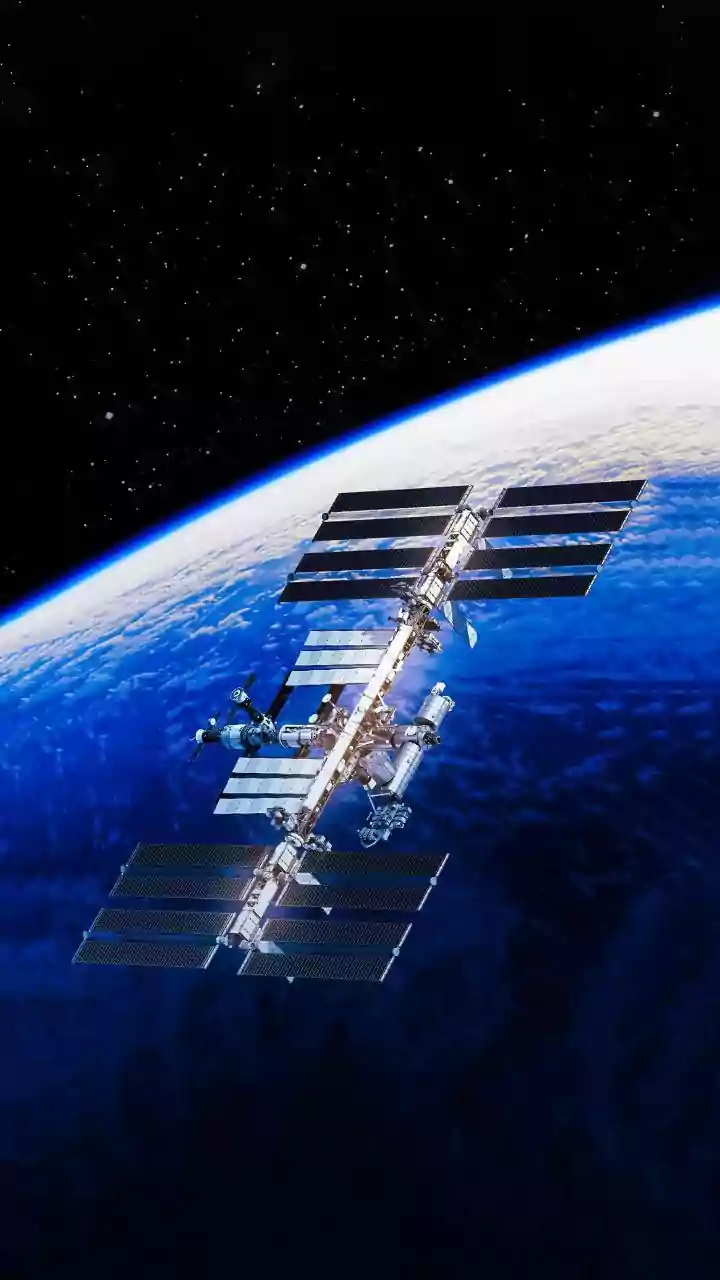
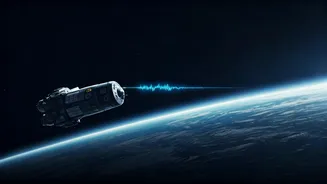
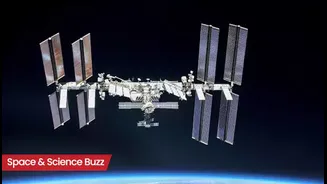
While space debris might be elusive in photographs, it remains a tangible aspect of human spaceflight. For instance, the International Space Station (ISS) routinely experiences minor impacts from tiny debris particles. However, spacecraft like the ISS are engineered with robust protective measures designed to withstand the kinetic energy of such micro-meteoroid and orbital debris impacts. The likelihood of a catastrophic collision with a larger object remains relatively slim, thanks to sophisticated tracking systems and avoidance maneuvers. These advanced systems continuously monitor potential hazards, providing astronauts with crucial data to ensure their safety during missions. Although the problem of space debris is a serious one, it's important to remember that space is immensely vast, and objects, even at high speeds, are often separated by enormous distances, contributing to the overall safety of astronauts during their voyages.