





The Steam Solution
Cleaning the microwave often involves battling dried-on food residues, a task that can be tedious and require harsh cleaning agents. Fortunately, a remarkably
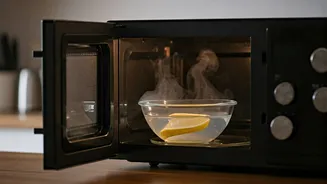
simple technique is gaining traction for its effectiveness and ease. Instead of reaching for chemical sprays that leave behind unpleasant odors, consider the power of steam. This method involves placing a damp towel inside the microwave and heating it for a short period. The resulting steam works wonders, softening hardened food particles and making them incredibly easy to wipe away. It transforms a dreaded chore into a quick and effortless maintenance task, proving that sometimes the most effective solutions are the most straightforward.
Science Behind Steam
The efficacy of this steam cleaning method is rooted in fundamental physics and chemistry. When a wet towel is heated in a microwave, the water molecules vibrate rapidly, reaching their boiling point and generating steam. This steam permeates the enclosed microwave cavity, penetrating the dried food stains. Scientifically, microwave energy is adept at breaking down complex organic compounds like polysaccharides, which act as natural adhesives binding food remnants to the microwave walls. The steam acts as a carrier for this energy, effectively loosening these bonds and dissolving the 'glue' that makes splatters so stubborn. This process doesn't just clean the surface; it reaches into crevices, making it a more thorough method than conventional wiping alone. It’s a time-efficient and energy-saving approach to maintaining a hygienic cooking environment, superior to abrasive scrubbing or chemical cleaners.
Healthier Kitchen Hygiene
Beyond just removing grime, the steam cleaning technique offers significant benefits for kitchen hygiene. Food residues left in a microwave can become a breeding ground for microorganisms, compromising the sanitation of your cooking space. Research indicates that steam cleaning effectively reduces microbial activity on domestic surfaces. This is particularly crucial for an appliance used to prepare food. By opting for this natural method, you avoid the risk of harmful chemical residues or toxic fumes being released when the microwave is next used. Maintaining a clean interior prevents the formation of difficult-to-remove deposits, especially around hinges and seals, and curbs the development of biofilms that can harbor hazardous materials, ensuring a safer and healthier environment for your family.
Simple Step-by-Step
Implementing this effective cleaning routine is exceptionally easy. Begin by taking a clean cotton cloth and thoroughly soaking it in water until it is damp but not dripping excessively. Place the wet cloth in the center of the microwave oven. Set the microwave to high power and run it for approximately 90 seconds. Once the heating cycle is complete, allow the microwave to stand with its door closed for an additional minute. This resting period is crucial, enabling the generated steam to fully penetrate and loosen any stuck-on food particles. When you carefully open the door, be mindful of the hot air released. Then, using the warmed cloth, simply wipe down the interior surfaces. You'll find that even the most persistent marks and stains will lift away with minimal effort, leaving your microwave pristine, all without any cost or scientific complexity.