



The Andean Aloo
The ubiquitous potato, or 'aloo,' a staple in Indian households, hails not from Indian soil but from the high-altitude Peruvian-Bolivian Andes. Its journey
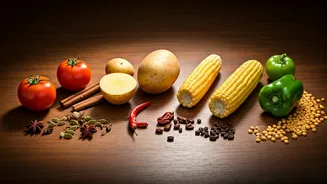
to India commenced in the latter half of the 16th century, transported by Portuguese navigators who were instrumental in the Columbian Exchange. This tuber integrated so profoundly into India's diverse culinary landscape that it now feels like an ancestral component of regional dishes, from the northern stuffed parathas to the southern masala dosas. Its seamless assimilation into everyday cooking is a testament to its adaptability and how it quickly became an indispensable ingredient, despite its South American origins.
South America's Tomato
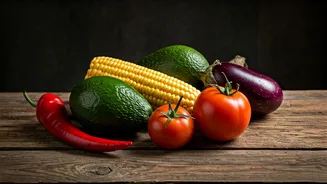
Today, tomatoes are the vibrant heart of countless Indian curries, tangy chutneys, and zesty street food snacks, yet they are not indigenous to the subcontinent. Originating in South America, the tomato first made its way to Europe in the early 16th century. Initially, Europeans regarded this fruit with suspicion, sometimes even valuing it for its ornamental appeal over its edibility. However, its inherent acidity and culinary versatility soon facilitated its global spread. India eventually received the tomato through the same maritime trade routes pioneered by the Portuguese, linking it to the influx of other New World produce.
The Chili's Fiery Arrival
The characteristic heat of Indian cuisine, often associated with spices, owes a significant debt to the chilli pepper, another import from the Americas. Introduced to India via Portuguese trade routes in the 16th century, chillies gradually supplanted traditional sources of pungency like black pepper, long pepper, ginger, and mustard. This transition was not instantaneous; chillies coexisted with established spices for some time. Their widespread adoption was fueled by their ease of cultivation, decreasing cost, and remarkable ability to enhance a multitude of dishes, from pungent pickles and chutneys to the foundational tempering of everyday meals. Their adaptability to Indian climates and palates eventually cemented their place in the nation's culinary identity.
Cashew's Brazilian Roots
The delightful cashew nut, a popular snack and ingredient in Indian sweets and savory dishes, actually originated in the northeastern regions of Brazil. Portuguese traders and missionaries introduced the cashew tree to India in the late 1500s, initially planting it along coastal areas to mitigate soil erosion. What began as an agricultural measure evolved into a culinary staple. The cashew tree thrived particularly in Goa, Kerala, and coastal Karnataka, becoming intertwined with local economies and seasonal traditions. Over generations, this nut shed its foreign association and became deeply embedded in the Indian food narrative, finding its way into festive confections, rich gravies, and daily munching.
Tropical Pineapple's Entry
The sweet and tangy pineapple, a tropical delight now commonly found across India, also arrived after many of the country's ancient food traditions were well-established. A native of South America, this fruit embarked on its journey to India through Portuguese trade networks during the 16th century, reaching the subcontinent around the mid-1500s. Its affinity for tropical climates allowed it to flourish, especially in the coastal and northeastern parts of India, gradually becoming incorporated into local dietary habits. Today, pineapples are a familiar sight, adorning street-side fruit stalls, enhancing festive desserts, and featuring in regional culinary preparations.
Papaya's Mexican Heritage
The papaya, a fruit that appears entirely at home in Indian markets and kitchens, traces its origins back to Mexico and Central America. Portuguese traders were responsible for bringing this New World fruit, along with others, to India during the 16th century. Similar to many other New World crops, the papaya arrived as an introduction and subsequently became a beloved part of Indian cuisine, largely due to the way Indian cooks embraced and adapted it. Its acceptance highlights the dynamic nature of food traditions, where imported ingredients can be so thoroughly integrated they become virtually indistinguishable from native produce.