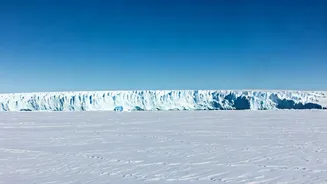

A Scientific Hub
Antarctica's designation as the 'Continent of Science' is not arbitrary; it signifies its unparalleled importance in global scientific endeavors. Unlike
other continents, Antarctica isn't governed by any single nation, fostering international collaboration among scientists. This shared research environment enables an array of studies, including climate change, geology, and astronomy. The extreme conditions and pristine environment provide a unique setting for observation and experimentation, yielding critical data not obtainable elsewhere. The collaborative atmosphere and access to distinctive research opportunities solidify Antarctica's position as a leading location for scientific innovation, and an ideal setting to conduct research and explore numerous scientific possibilities.
Why Science Thrives
Several factors make Antarctica exceptionally suitable for scientific research. Its isolation from human activity minimizes pollution and interference, creating an untouched setting for environmental studies. The ice sheets contain ice cores that serve as historical records of Earth's climate, allowing scientists to analyze past climate change patterns and forecast future trends. The continent's unique geographic location and extreme climate also offer ideal conditions for studying space. The lack of light pollution and thin atmosphere allow for clearer astronomical observations. Moreover, Antarctica is a perfect spot for studying geology and the Earth's processes as it helps scientists gain insights into the planet’s formation and its ongoing evolution. Thus, Antarctica’s isolation, climate, and geological features contribute to its scientific prominence.
NASA's Space Studies
NASA frequently utilizes Antarctica as a real-world testing ground for space exploration technologies. The harsh conditions in Antarctica resemble those found in space. This similarity allows NASA scientists to test equipment, train astronauts, and develop strategies for long-duration space missions. For example, the Antarctic search for meteorites is a major activity; these extraterrestrial objects provide scientists with invaluable insights into the origins of the solar system. Furthermore, the extreme cold and darkness of Antarctica create an environment to study the effects of radiation and isolation on humans. This research supports NASA's goals of sending humans into space by addressing critical challenges. Thus, Antarctica becomes an essential asset to NASA’s long-term space exploration efforts.
The Continent's Future
Antarctica's future as a scientific hub hinges on continued international cooperation and environmental protection. Preserving its pristine environment is crucial for ongoing research and maintaining the integrity of scientific findings. The international community must work together to tackle climate change, reducing its impacts on the ice sheets and surrounding ecosystems. Promoting scientific education and engagement will attract more researchers to the continent. Continued funding for research facilities and projects is necessary to support ongoing studies and the discovery of new information. By recognizing Antarctica’s value and protecting its environment, the scientific community can ensure that this extraordinary continent remains a source of vital knowledge for generations.