






The Silent Spoilage
Many kitchens harbor a hidden adversary: humidity. This unseen force stealthily promotes bacterial growth, degrades valuable nutrients, and ultimately
transforms perfectly good pantry staples into inedible waste. Often, the back of a cupboard becomes a forgotten zone where opened bags of flour, dried fruits, and pasta are left to languish. When rediscovered, these items frequently appear as moldy garbage, their best-by dates long past, a direct consequence of unchecked moisture. This pervasive dampness can creep from dark corners, rendering durable groceries unfit for consumption. Understanding and managing this atmospheric element is fundamental to ensuring a hygienic kitchen environment and maintaining sound financial management by preventing unnecessary food expenditure.
Moisture and Food's Dance
The relationship between moisture and food is remarkably intricate, requiring a delicate balance for preservation. The longevity of basic staples hinges on their initial dryness; items like grains, beans, fruits, and seeds possess minimal water content, making them inherently stable. However, the ambient atmosphere of a typical kitchen is rarely as dry as these ingredients require. Food storage is exceptionally sensitive to environmental conditions, and even a minor increase in humidity can initiate a cascade of spoilage. Dried foods readily absorb atmospheric moisture, acting like sponges until conditions become ideal for bacterial proliferation. Beyond just spoilage, excessively high moisture levels can significantly diminish a food's nutritional value before it's even consumed. Research indicates that high humidity accelerates the degradation of essential vitamins and minerals, meaning that the packaged rice you buy might be lacking in the vital nutrients it's supposed to provide. Furthermore, this moisture encourages dried foods to become metabolically active, leading to heat generation and decomposition, thereby spoiling the food. To keep these items dormant and preserved, a dry air environment is essential.
Ensuring Shelf Life
To extend the shelf life of your dried goods for years, creating a controlled storage environment is paramount. The most conducive conditions involve a cool, dry place where humidity levels consistently remain below 60 percent. When humidity is high, the negative impacts are immediate: salt clumps together, and crackers lose their satisfying crunch. Crucially, airtight containers and a cool storage environment, maintained below 60% humidity, are vital for preserving both the quality and nutritional integrity of your food over extended periods. Temperature also plays a significant role; warmer air inherently holds more moisture than cooler air. Consequently, storing your pantry items near heat-generating appliances like dishwashers or stoves substantially elevates the risk of spoilage. The steam from hot water or the heat emitted by dryers can create a localized microclimate within cabinets, leading to moisture absorption by stored products and fostering a breeding ground for microorganisms. Experts recommend maintaining temperatures between 40°F and 70°F for optimal food preservation conditions.
Drying Up the Pantry
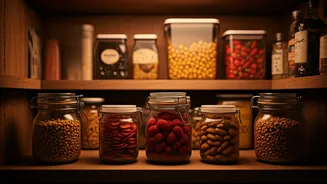
Preventing excess moisture from damaging your food products doesn't require specialized laboratory equipment; the primary step involves removing items from their original packaging. Many products come in permeable paper or flimsy plastic, which allow moisture to penetrate over time. Transferring these goods into airtight containers, such as glass jars or robust plastic bags, is a simple yet effective measure. In regions experiencing extremely high humidity, an additional step may be beneficial. For particularly moisture-sensitive items like dried mushrooms or specialized flours, small desiccant packets, such as silica gel, can be invaluable in absorbing excess moisture. A critical finding from research highlights that maintaining a stable environment is more important than achieving a theoretically ideal one. Fluctuations in temperature and humidity, known as "cycling," can negatively impact both the product and its packaging, accelerating spoilage. Finally, consider placement carefully. Storing large quantities of grains directly on the floor is ill-advised, as concrete can wick moisture into the bags. Utilizing shelving allows for better air circulation around stored items. This approach not only preserves food but also helps maintain the natural chemical and nutritional balance within your kitchen ecosystem.