






Controlled Environment Advantage
Trains operate within a highly controlled and predictable environment, a stark contrast to the unpredictable nature of road travel. Unlike cars that share
dynamic roadways with other vehicles and diverse obstacles, trains are confined to dedicated tracks. These tracks are meticulously managed by sophisticated signalling systems and adhere to stringent speed regulations, significantly minimizing the likelihood of sudden, unexpected stops or directional changes. Regulatory bodies like the European Union Agency for Railways consistently affirm that rail travel remains one of the safest transport methods globally, largely due to this inherent controlled system. The fixed nature of the tracks and the advanced oversight create a stable journey, mitigating the need for individual passenger restraints like seat belts. This foundational aspect of rail operation underpins many of the decisions made regarding onboard safety features.
Train Dynamics and Design
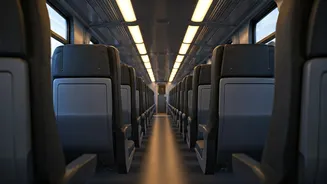
Rail safety experts emphasize that seat belts are primarily necessitated in vehicles prone to abrupt deceleration or unpredictable maneuvers, such as cars and airplanes. Trains, however, possess immense mass and inertia, which results in a much more gradual deceleration, even during emergency braking situations. Furthermore, train coaches are engineered with inherent safety features, including energy-absorbing interiors and cushioned seating, designed to mitigate impact forces during accidents. These integrated crash-management systems are crucial for reducing passenger injury risks. Intriguingly, railway safety analyses suggest that installing seat belts could, in certain accident scenarios like coach overturns, paradoxically increase passenger harm. Unbelted occupants might become projectiles, while those secured could suffer severe injuries from the seat belt itself. Therefore, the intrinsic design of train carriages prioritizes collective passenger safety through structural integrity and impact mitigation rather than individual restraints.
High-Speed Safety Records
The absence of seat belts extends even to the world's fastest trains, a testament to the robust safety paradigms in rail transport. For instance, Japan's Shinkansen, a marvel of engineering that operates at speeds exceeding 300 km/h, relies heavily on its advanced automated control systems for safety. This high-speed network boasts an exceptional safety record, underscoring the effectiveness of its operational design. Similarly, many high-speed rail services across countries like France, Germany, and Spain have also forgone seat belts. This widespread practice indicates a global consensus among railway authorities that the inherent safety of these advanced train systems, coupled with their controlled environments and predictable deceleration characteristics, renders seat belts an unnecessary and potentially counterproductive feature. The focus remains on system-level safety rather than individual restraint.
Passenger Mobility and Convenience
Beyond the primary safety considerations, practical aspects also contribute to the decision to omit seat belts on trains. Trains are fundamentally designed to facilitate passenger movement and comfort during journeys. Travelers frequently move about the train for various reasons, such as accessing dining cars, moving between sleeper cabins, or using restroom facilities. Requiring seat belts would significantly impede this mobility, creating a less convenient and more restrictive travel experience. The design philosophy for trains embraces the concept of a relatively safe internal environment where passengers can stand and walk without undue risk. This focus on passenger convenience, combined with the inherent safety of the train's operation, shapes the passenger experience and leads to the exclusion of seat belts, prioritizing freedom of movement within a secure setting.
Traveler Safety Habits
For passengers, the absence of seat belts on trains should not be misconstrued as an indicator of diminished safety. In fact, the lack of restraints is a deliberate design choice stemming from the train's secure operational nature. Instead of focusing on seat belts, travelers are encouraged to adopt practical safety habits to enhance their journey. These include ensuring personal luggage is stowed securely to prevent displacement during sudden braking, maintaining balance by holding onto handrails when walking through moving carriages, and paying close attention to onboard announcements, especially on high-speed or overnight routes. These proactive measures contribute significantly to a safe and comfortable travel experience, reinforcing that passenger vigilance and awareness play a crucial role alongside the train's engineered safety features.