






Understanding Home Automation
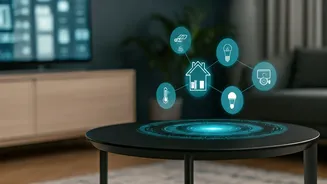
Home automation, or smart home technology, refers to the integration of technology into the home environment to control and automate various functions.
It involves connecting devices and appliances, such as lighting, security systems, and entertainment units, to a central hub, typically controlled via a smartphone, tablet, or voice commands. The primary objective of home automation is to enhance convenience, security, and energy efficiency, offering homeowners greater control over their living spaces. This includes automated control of lights, climate control, security systems, and entertainment devices, creating a more responsive and personalized living experience.
Enhanced Comfort & Convenience
Home automation significantly boosts comfort and convenience in Indian homes by enabling remote control and automation of various home functions. For example, homeowners can pre-set the temperature of their air conditioning, turn on lights, or start the washing machine from their smartphones, eliminating the need for manual operation. Smart lighting systems allow for adjusting brightness and color temperature, and automated curtains and blinds provide effortless control over natural light and privacy. These features eliminate the need for manual tasks and allow for personalized comfort settings. They help to make daily routines easier and more efficient, thus contributing to an enhanced living experience overall.
Boosting Energy Efficiency
Energy efficiency is another key benefit of home automation. Smart devices and systems help optimize energy consumption by intelligently managing lighting, heating, and cooling. Smart thermostats learn and adapt to the homeowner's usage patterns, automatically adjusting temperatures to conserve energy when the house is unoccupied. Smart plugs can monitor and control the energy usage of individual appliances, allowing homeowners to identify and reduce energy waste. Through smart lighting, lights can be scheduled to turn off automatically in unoccupied rooms or dimmed to consume less power. As a result, homeowners can reduce their carbon footprint and save on energy bills, making their homes more environmentally friendly and cost-effective.
Improved Security Features
Home automation systems also offer enhanced security features, providing homeowners with peace of mind. Smart security systems, including cameras, door and window sensors, and smart locks, allow homeowners to monitor their homes remotely. They can receive real-time alerts on their smartphones if any unusual activity is detected, such as a break-in or unauthorized entry. Smart doorbells with video capabilities enable homeowners to see and communicate with visitors at their doorsteps, even when they are away from home. These security features add an extra layer of protection, making Indian homes safer and more secure, and providing residents with greater control over their home's security.
Integration and Control
The integration of various home automation devices is essential for creating a seamless and efficient smart home. Most home automation systems use a central hub that connects all devices, allowing users to control them from a single interface. Popular platforms, such as Google Home, Amazon Alexa, and Apple HomeKit, provide voice control and integration capabilities. The ability to integrate multiple devices allows for customized automation routines. For example, a homeowner can set up a 'goodnight' scene that locks the doors, turns off the lights, and adjusts the thermostat with a single voice command. This centralized control and integrated functionality are crucial for creating a truly smart and user-friendly home.