



Meghan's Minimalist Chic
In 2018, Meghan Markle eschewed opulent embellishments for a strikingly minimalist design by Clare Waight Keller for Givenchy. Her gown was crafted from
unadorned silk cady, featuring a sophisticated bateau neckline. The true drama of her ensemble lay not in the dress itself, but in the expansive 16-foot veil, meticulously hand-embroidered with the distinctive flora representing all 53 Commonwealth nations. This choice presented a sleek, understated, yet utterly memorable bridal statement that deviated from more traditional royal wedding attire.
Grace Kelly's Elegance
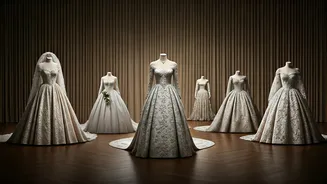
The mention of royal brides inevitably brings to mind the timeless grace of Grace Kelly. In 1956, the acclaimed Hollywood actress, who became the Princess of Monaco, was gifted her wedding gown by MGM studios. This exquisite creation, designed by Academy Award winner Helen Rose, featured an antique Brussels lace bodice paired with a flowing silk faille skirt. This ensemble quickly established itself as the benchmark for royal bridal sophistication and enduring style, setting a precedent for elegance that resonated for decades.
Kate Middleton's Influence
Does Catherine Middleton's wedding dress resonate with you? It certainly should. Sarah Burton, for the Alexander McQueen house, meticulously crafted a gown for the Princess of Wales that bore a striking resemblance to Grace Kelly's iconic look. With its Victorian-inspired structured corset, graceful long lace sleeves, and an impressive nearly 9-foot train, Kate Middleton's choice single-handedly revitalized the long-sleeved lace wedding gown trend. It remains one of the most frequently replicated designs of the 21st century, a testament to its enduring appeal and timeless design.
Beatrice's Vintage Charm
Decades later, Princess Beatrice offered a heartwarming tribute by delving into her grandmother's wardrobe. For her 2020 wedding, Beatrice selected a vintage Norman Hartnell gown that Queen Elizabeth II had originally worn to a movie premiere in the 1960s. After thoughtfully incorporating sheer organza puff sleeves, she presented a rare and beautiful example of royal upcycling to the world. This act showcased a unique blend of personal history and sustainable fashion within the royal context.
Rania's Bold Statement
Queen Rania of Jordan made a significant departure from the conventional European bridal aesthetic in 1993. Her chosen gown, designed by Bruce Oldfield, completely bypassed the typical all-white European silhouette. Instead, it boldly featured a tailored collar and lavish gold embroidery, drawing profound inspiration from traditional Syrian formal wear. This striking and culturally rich design offered a stunning alternative to prevailing bridal norms.
Elizabeth II's Hopeful Gown
Some of the most impactful dresses carry deep historical significance. When Queen Elizabeth II married in 1947, Britain was still grappling with the economic aftermath of World War II and faced rationing. She remarkably utilized ration coupons to procure the materials for her Norman Hartnell gown. The dress was intricately adorned with 10,000 seed pearls, meticulously arranged in motifs of spring flowers, serving as a poignant symbol of optimism and renewal for a nation in recovery.
Diana's Fairy Tale Vision
Let's be honest, when a royal wedding approaches, the dress reveal is a paramount event. David and Elizabeth Emanuel designed Princess Diana's 1981 wedding gown to embody the ultimate fairy-tale moment. Crafted from ivory silk taffeta, the voluminous dress epitomized the 1980s style. It was embellished with an astonishing 10,000 pearls and featured those iconic, dramatically puffed sleeves, along with a record-breaking 24-foot train. This spectacular creation was a closely guarded secret until the very instant she emerged from her carriage.