







A Grim Outcome
In a deeply saddening event in Ahmedabad, two young sisters lost their lives after eating dosa prepared with batter purchased from a local vendor. The
family experienced severe vomiting following their meal, leading to the young girls' deaths. Their parents were hospitalized in critical condition. This incident has prompted authorities to collect samples of the batter for thorough investigation and analysis to determine the exact cause of the tragedy. The use of fermented batter, like that for dosa, idli, and uttapam, is common in Indian households and often considered beneficial due to the fermentation process. However, this incident underscores the paramount importance of ensuring the safety and quality of pre-prepared food items.
What Went Wrong
The unfortunate sequence of events began when the father of the deceased children purchased ready-to-use fermented batter, known locally as 'khiru', from a neighborhood shop on April 1st. Shortly after consuming dosa made from this batter, the mother and their two daughters began exhibiting symptoms of severe vomiting. Their conditions rapidly worsened, necessitating hospitalization. Tragically, the family's youngest, a 3-month-old infant, succumbed to the illness on April 3rd, followed by her 4-year-old sister. The parents remain under medical care. In response to this heartbreaking incident, the Ahmedabad Municipal Corporation promptly collected batter samples from the vendor, which have been submitted to the Food and Security Laboratory (FSL) for detailed examination to identify any contaminants or spoilage.
Understanding Khiru
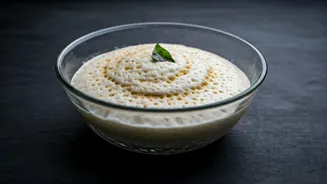
Khiru is a traditional Gujarati term for a fermented batter primarily used to prepare South Indian delicacies such as dosa, idli, and uttapam, as well as local dishes like handvo. Its foundation typically consists of a blend of rice and skinless urad dal (split black gram). The batter is then left to ferment for a period of 4 to 5 hours, or often overnight. This fermentation process is crucial as it develops a light, airy texture, which is essential for achieving the characteristic softness and crispness of dishes like dosa. The aging process not only enhances the flavor but also contributes to the digestibility of the final product.
Store-Bought Batter Perils
Experts advise increased caution with food, especially during warmer months, and when consuming items prepared outside the home. Store-bought food, particularly if not adequately covered and handled with proper hygiene, carries a higher risk of spoilage and can lead to severe health issues, even fatal ones. There are several reasons to be wary of commercially prepared fermented batters. Firstly, the risk of contamination is significant; exposure to air and unhygienic handling can introduce bacteria, leading to infections and food poisoning if not refrigerated correctly. Over-fermentation, especially in hot weather, can make the batter excessively sour, causing acidity, bloating, and digestive discomfort. Additionally, packaged batters may contain preservatives or stabilizers that could be detrimental to long-term gut health with frequent consumption. Unsanitary practices, such as unwashed hands touching the batter, can promote bacterial growth, leading to gas and stomach upset, particularly for those with sensitive digestive systems. Finally, the quality and cleanliness of ingredients used in commercial batters may not be as rigorously controlled as in home preparations, potentially leading to serious digestive problems.
Safe Batter Preparation
For those who prefer to make their own khiru batter at home, the process is straightforward and ensures greater control over ingredients and hygiene. You will need 1 cup of rice (regular or idli rice), ¼ cup of skinless urad dal, 1-2 tablespoons of poha (flattened rice), and ½ teaspoon of fenugreek seeds. Begin by washing and soaking the rice separately. In another bowl, wash and soak the urad dal and fenugreek seeds together. Add the poha to the soaking rice. Allow these to soak for approximately 4 to 6 hours, or even overnight. Next, grind the urad dal and fenugreek seeds mixture until it becomes light and fluffy. Subsequently, grind the soaked rice to a slightly coarse consistency. Combine both the ground urad dal and rice mixtures in a large bowl, adding salt to taste, and mix thoroughly. Cover the bowl and leave it in a warm place for 8 to 12 hours, or overnight, to allow for proper fermentation. Once fermented, your khiru batter is ready to use. If not using immediately, store it in a clean, closed jar in the refrigerator.