





The Muddy Canvas
Dabu printing, a heritage craft from Bagru near Jaipur, begins not with dye, but with earth. Artisans meticulously prepare a special mud paste, a blend
of local clay, lime, gum, and wheat chaff. This earthy mixture is then applied to fabric using intricately carved wooden blocks. The core principle of Dabu is resist printing; specific areas of the cloth are covered with this paste, acting as a barrier against the dyes that will later be introduced. This process ensures that the patterns emerge from the parts of the fabric that remain untouched by the dye, showcasing a unique visual language born from subtraction rather than addition of color. Jayati Goenka's recent work highlights the raw, tactile nature of this ancient technique, emphasizing the direct imprint of the earth on the textile itself.
Ancient Roots, Modern Flow
Originating in Rajasthan, Dabu printing is a venerable resist-dyeing tradition, predominantly practiced by the Chhipa community for centuries. The name 'Dabu' itself derives from the Hindi word 'dabana,' meaning 'to press,' a direct reference to the physical act of applying the carved blocks. Unlike contemporary methods like screen printing or digital textile design, Dabu's journey commences with mud, not ink. Before any printing occurs, the chosen fabric, typically cotton or Chanderi, undergoes a thorough scouring and washing process. This essential preparation removes any residual starch, oils, or dust, ensuring the textile is perfectly primed to absorb natural dyes deeply and permanently. The meticulous preparation sets the stage for the unique artistry that follows, where natural materials and human touch combine.
Crafting The Resist
The heart of Dabu lies in its unique mud paste, a carefully concocted blend that forms the resist. Local clay forms the base, expertly mixed with lime, natural gum, and fermented binders until it achieves a thick, workable consistency. Each artisan workshop often refines its own proprietary formula, adapting it based on prevailing weather conditions, the local water quality, and the specific type of textile being used. These variations influence the print's edge—some mixtures create crisper lines, while others yield softer, more diffused patterns that gently bleed into the weave. The artisan then applies a hand-carved teak block, pressing it firmly onto the stretched fabric. This imprinted mud acts as a shield, protecting those sections of the cloth from absorbing the dye. Following the block application, a dusting of fine sawdust helps the mud resist to stay intact during subsequent handling and the dyeing immersion, preventing any accidental smudging.
The Art of Subtraction
Dabu printing operates on a principle of subtraction, where the design emerges from the areas that are protected from dye, rather than those adorned with pigment. The pattern exists in the fabric that remains untouched by the dyeing process. This interplay between the covered and uncovered sections defines Dabu's distinctive visual character. The design unfolds through a deliberate sequence of stages, involving multiple rounds of drying, dyeing, washing, and oxidation. Each step contributes to the final aesthetic, allowing the inherent qualities of the materials and the environment to shape the outcome. The resist's ability to prevent dye penetration is what gives Dabu its unique aesthetic, setting it apart from other printing techniques.
Nature's Influence on Dye
Once the printing process is complete, the fabric is left to dry in the open air, allowing the mud resist to harden completely. The arid climate of Rajasthan plays a significant role in shaping the final appearance of the Dabu prints. Intense heat helps to seal the mud onto the fabric, while prevailing winds can influence the drying speed. Even humidity levels can alter how the fabric absorbs moisture and dye. Subsequently, the textile is immersed in natural dyes, often prepared through fermentation using ingredients like jaggery and lime, alongside plant-derived indigo. Initially, the fabric might emerge from the dye vat with a greenish hue, which then transforms into a vibrant blue through oxidation when exposed to oxygen. This multi-stage dyeing process, involving several dips, allows for the gradual darkening of the color, resulting in richer saturation and subtle tonal variations across the fabric's surface.
The Reveal and Imperfections
The most enchanting aspect of Dabu printing unfolds during the final washing stage. As the hardened mud dissolves in water, the sections of fabric that were protected by the resist are revealed against the dyed backdrop. It's rare to find perfectly sharp lines in traditional Dabu. Slight cracking of the mud during drying is common, allowing minute traces of dye to seep through, creating delicate, irregular textures. Variations in block pressure from one impression to another, coupled with the inherent texture of the fabric itself, contribute to the unique surface quality that defines handcrafted Dabu textiles. These subtle imperfections are not flaws but integral elements that bestow the fabric with its characteristic artisanal charm and authenticity.
Motifs and Modern Style
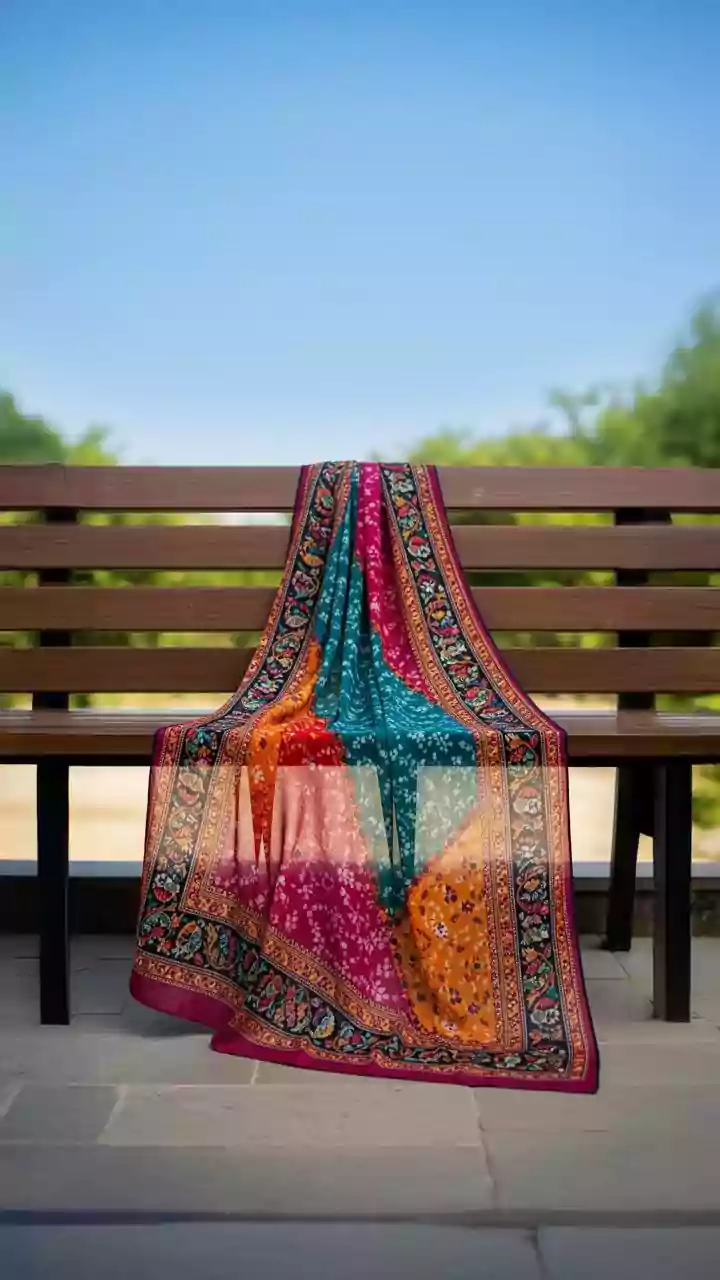
Traditionally, Dabu printing often features motifs inspired by nature, such as floral patterns, mango shapes, elaborate lattice designs (jaals), and representations of desert flora. However, contemporary interpretations are increasingly shifting focus towards the interplay of textures, spatial arrangements, and surface movement within the fabric. In many recent design collections, the textile itself becomes the dominant visual element, with vast expanses of undyed cloth juxtaposed against fields of washed indigo. This approach results in garments that possess an ethereal lightness, despite the complex, labor-intensive process behind their creation. The craft's adaptability is evident in how it can be reinterpreted on delicate fabrics like sheer Chanderi, airy cotton mesh, and organza, creating fluid silhouettes.
Dabu in Contemporary Fashion
The relationship between Dabu printing and the fashion industry has undergone a significant transformation over the past decade. Previously, Dabu textiles were often associated with heavier, rustic fabrics and a more traditional aesthetic. Today, designers are reimagining Dabu by incorporating it into lighter materials such as sheer Chanderi, airy cotton mesh, and delicate organza, resulting in fluid and modern silhouettes. The indigo dye, once applied richly, is now often seen in faded, smoky, or clouded variations. This craft readily integrates into modern wardrobes due to its inherent organic irregularity and breathable structure, offering a unique blend of heritage and contemporary style that appeals to a global audience.
Ecological Harmony
Dabu printing possesses an inherent environmental logic that has been refined over centuries of practice. Its ecosystem is characterized by the use of natural dyes, reliance on sun-drying methods, and hand-driven production processes, all of which contribute to its low-energy footprint. Water consumption is primarily associated with the washing and dyeing stages, and artisans continue to utilize locally sourced materials gathered from their surrounding landscapes. The pace of the entire Dabu process is dictated by the rhythms of the climate and the manual efforts of the artisans, rather than the relentless output of industrial machinery. This approach fosters a sustainable model of textile creation that respects natural resources and traditional knowledge.
The Tactile Legacy
In an era dominated by digital precision in textile manufacturing, Dabu printing stands out by preserving tangible evidence of human touch. Each phase of the process leaves behind physical traces—from the subtle cracks in the dried mud and the delicate bleed of dye to the distinct pressure marks from the carved blocks. The craft authentically carries the textures of weather, soil, water, and human labor directly onto the fabric's surface. Through its contemporary interpretations, Jayati Goenka positions Dabu printing as a profound dialogue between the earth and the textile, where the preserved spaces on the cloth hold as much narrative and meaning as the dyed areas, celebrating the enduring beauty of handcrafted artistry.