



The Polish Paradox
Many believe that applying polish or wax to wood furniture is solely about protection and enhancing shine, a comforting ritual often performed with cherished
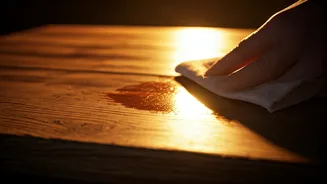
pieces like mahogany coffee tables or teak dining tables. The act of wiping down, seeing the wood darken and brighten, seems to confirm its efficacy. However, a counterintuitive reality exists: this very process can lead to a dull, lifeless appearance. The issue isn't typically the presence of dirt, but rather the accumulation of the polish itself. Over time, a microscopic film composed of wax and silicone can form on the wood's surface, settling between the natural grain. This layer effectively absorbs light rather than reflecting it, transforming the rich, organic tones of the wood into a plastic-like sheen. This artificial coating also impedes the wood's natural ability to regulate humidity, creating an environment ripe for discoloration and further dullness, a stark contrast to the desired vibrant finish.
Chemistry of Dullness
The diminished vibrancy of wood furniture isn't merely a superficial effect; it's a complex interplay between the wood's intrinsic chemical makeup and the substances applied to it. Research into the aging process of wood's fundamental components, such as holocellulose and lignin, reveals that its surface is highly susceptible to molecular alterations. When residues from polishes and waxes build up, they create a barrier that traps external pollutants. This film can make the surface feel slick or slightly sticky because the wood's natural particles are now submerged beneath this synthetic resin. Consequently, the intricate texture of the wood becomes blurred, and its capacity to manage moisture levels is compromised. This leads to the formation of an artificial microclimate, resulting in patchy discoloration and a significant loss of the wood's inherent glow. Furthermore, these residues attract dust and are further degraded by UV radiation, initiating chemical reactions that are difficult to remove and diminish the wood's natural protective qualities.
Revitalizing Wood Surfaces
When your wooden furniture continues to appear dull despite repeated attempts to clean and polish it, it's a clear sign that the problem lies with the accumulated polish, not a lack of it. The solution is not to apply more products, but to thoroughly cleanse the surface, removing this artificial film without causing damage to the wood beneath. The key is to utilize gentle, pH-neutral cleaning agents specifically designed to dissolve oily substances. Once this obscuring layer is successfully lifted, the wood's natural surface energy will be restored, allowing its inherent appearance to re-emerge. For ongoing maintenance, adopting a 'less is more' philosophy is crucial. Instead of frequent chemical applications, rely on dry, lint-free microfiber cloths for routine dusting to prevent particles from adhering to sticky residues. When a more thorough cleaning is necessary, a slightly damp cloth followed immediately by a dry one is usually sufficient, preserving the wood's natural beauty and integrity.
Smart Maintenance Practices
Effective care for wooden furniture transcends constant polishing; it emphasizes preservation through mindful practices. A simple test to gauge the need for a deeper clean involves gently gliding your hand over the surface. If you feel friction, it indicates residue buildup and signals it's time for a comprehensive overhaul. When selecting cleaning and finishing products, it is vital to steer clear of inferior waxes containing silicone, which contribute to the problem. Beyond cleaning, environmental management plays a significant role. Store wood pieces away from direct heat sources, such as vents, and avoid humidifiers that can cause condensation, trapping residues and dulling the finish. For a natural way to enhance shine, after cleaning, buff the wood with a soft fabric. The friction generates warmth, which helps bring out the wood's natural oils within the grain, restoring its luster without the need for additional chemicals. The ultimate goal is to shift focus from creating an artificial sheen to revealing the authentic beauty and grain of the wood itself.