




Gili Islands' Serenity
Just off Lombok's northwestern coast lie the Gili Islands – Gili Trawangan, Gili Meno, and Gili Air. These three islands present an idyllic beach experience
that has become increasingly rare, particularly in their profound quietude. Unlike Bali, motorized vehicles are entirely absent, meaning the only sounds you'll encounter are the gentle rhythm of the waves and the rustling of palm trees. This peaceful environment is a haven for world-class snorkeling, where encounters with majestic sea turtles are common, offering an immersive underwater adventure far removed from the hustle and bustle of more developed tourist destinations.
Rare Pink Sands
Lombok is home to the extraordinary Pantai Merah, famously known as Pink Beach. This unique shoreline derives its distinctive rosy hue from countless tiny fragments of red coral that have naturally blended with the white sand. As one of only a few such beaches globally, it offers a truly remarkable sight. The contrast between the soft pink sand and the vibrant aquamarine waters creates a visually stunning panorama, perfect for photography. Crucially, even during peak travel times, Pink Beach remains largely uncrowded, allowing visitors to appreciate its rare beauty in relative solitude.
Kuta Lombok's Charm
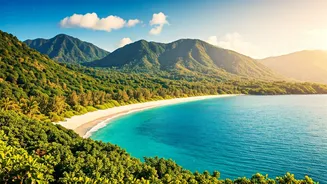
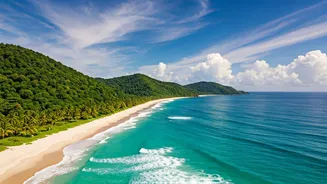
While sharing a name with Bali's bustling Kuta, Lombok's version offers a nostalgic glimpse into what Bali might have felt like decades ago. This horseshoe-shaped bay is expansive, bordered by picturesque hills that gracefully descend to meet the turquoise sea. Development here is minimal, preserving a natural and authentic atmosphere. Visitors can enjoy delicious and affordable local cuisine from traditional warungs, and the surf breaks are dominated by surfers rather than social media influencers. Experiencing Kuta Lombok now presents a unique opportunity to enjoy its unspoiled charm before wider recognition changes its character.
Majestic Mount Rinjani
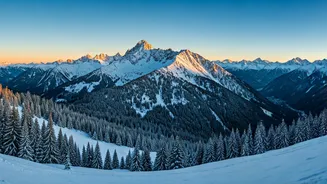
Lombok boasts Mount Rinjani, Indonesia's second-highest volcano, a towering peak that commands attention across the island's landscape. Reaching over 3,700 meters above sea level, Rinjani provides a dramatic backdrop visible from many northern beaches. The volcanic crater lake, Segara Anak, is renowned as one of Southeast Asia's most breathtaking trekking destinations. While Balinese beaches often offer views of inland rice terraces, Lombok's coastline provides a more awe-inspiring vista, looking up towards this monumental natural wonder, a constant reminder of the island's raw geological power.
World-Class Surfing
For surfers, Lombok presents a compelling proposition with its world-class waves that remain significantly less crowded than those found in Bali. Desert Point, situated on the island's southwest tip, is globally celebrated for its exceptionally long and rapid left-hand barrel, a dream for experienced surfers. Beyond this challenging wave, spots like Mawi and Selong Belanak offer more forgiving conditions suitable for intermediate riders. For those who prefer to relax, Lombok's numerous beaches provide ample space and tranquility, allowing for an unhurried enjoyment of the coastline.
Pristine Water Quality
A significant advantage of visiting Lombok is its measurably cleaner coastal waters, a stark contrast to some of Bali's more affected areas. The challenges of overtourism and wastewater management in Bali have unfortunately impacted its water quality, particularly around popular southern hubs. Lombok, experiencing less intense land pressure and possessing more robust natural coastal defenses, maintains exceptional water clarity. On calm days, underwater visibility frequently surpasses 20 meters, enhancing the experience of swimming, snorkeling, and simply enjoying the pristine marine environment without concern for pollution.
Exceptional Value
Lombok offers remarkable value for money, allowing travelers to experience a higher standard of travel for a fraction of the cost compared to Bali. Accommodation, especially beachfront properties, is considerably more affordable; a private villa with an ocean view that might cost $300 per night in Bali's Seminyak could be found for around $80 in areas like Selong Belanak or Tanjung Aan. This cost-effectiveness extends to other aspects of travel, including local food, transportation, and activities, ensuring that visitors receive a significantly better return on their tourism expenditure.
Authentic Local Culture
Lombok retains a strong sense of local culture that remains largely independent of the tourism industry. Villages like Sade are notable for preserving traditional Sasak architecture and intricate weaving practices as integral parts of daily life, rather than mere tourist spectacles. Along the coast, traditional fishing communities continue their age-old practices, launching and landing their boats on the very beaches where travelers enjoy the sea. This creates a profound sense of respect and coexistence, where visitors feel like guests rather than proprietors, cherishing the island's natural and cultural heritage.