



Ancient Origins & Unisex Roots
The story of the dupatta spans over three millennia, with its earliest evidence found in the Indus Valley Civilization, notably on the "Priest-King" sculpture,
which depicts a cloth draped over the shoulder. The Sanskrit origins of the word, 'du' meaning two and 'patta' meaning strip of cloth, hint at its construction. During the Vedic period, it was known as an 'uttariya' and served a practical purpose for both men and women as a unisex cloak, offering protection from the elements and maintaining modesty. At this ancient juncture, the focus was more on the way the fabric was draped and folded rather than its material composition, signifying a period where practicality and modest coverage were paramount for all individuals, irrespective of gender.
Mughal Opulence & Artistic Flourish
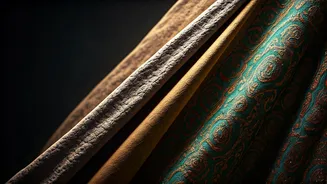
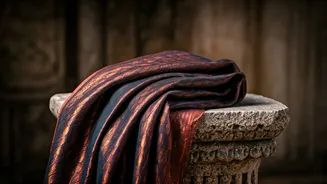
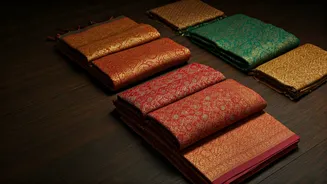
The arrival of the Mughals marked a significant turning point for the dupatta, elevating it from a simple utilitarian item to an emblem of luxury and sophisticated design. Influenced by Persian aesthetics, the royal courts began adorning dupattas with rich, opulent fabrics like fine silks, plush velvets, and intricate brocades. For noblewomen across both Hindu and Muslim traditions, the dupatta became a tool for adhering to the purdah system, a practice emphasizing modesty. However, rather than diminishing their presence, these women transformed the dupatta into a statement piece, elaborately embellished with pearls, precious gemstones, heavy embroidery, and shimmering zari (gold and silver thread) work. This era redefined the dupatta as not merely a covering but a canvas for wearable art, showcasing immense craftsmanship and status.
The Weight of Honor
The cultural narrative surrounding the dupatta is deeply intertwined with notions of gender and societal expectations, particularly its association with 'izzat,' or family honor. For generations, it was culturally mandated that a woman's purity, dignity, and respect for her elders were demonstrated through the way she wore the dupatta, often covering her head and chest. This simple garment became a symbol of a woman's adherence to strict societal codes. While this traditional expectation persists in certain contexts, particularly when entering religious spaces like temples, mosques, or gurdwaras as a sign of reverence, modern urban Indian society has witnessed a significant shift. The dupatta has largely shed its role as a compulsory modesty garment, evolving into an optional accessory that allows individuals to express their personal style and identity.
A Tapestry of Indian Weaves
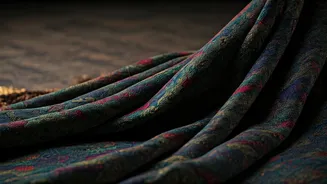
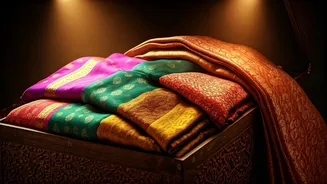
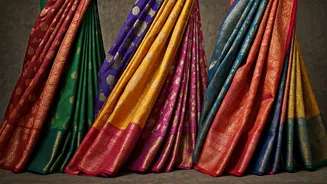
As the dupatta permeated the diverse regions of the Indian subcontinent, local artisans infused it with their unique cultural heritage and weaving techniques, transforming it into a vibrant representation of India's rich textile landscape. Each region's contribution to dupatta artistry tells a story. Punjab's distinctive Phulkari, characterized by its bold, geometric floral threadwork, stands out. Varanasi offers unparalleled luxury with its exquisite Banarasi weaves, renowned for their intricate gold and silver zari embellishments. Gujarat and Rajasthan are celebrated for Bandhani, a meticulous tie-dye technique creating precise dotted patterns. Lucknow contributes the elegant, subtle beauty of white-on-white Chikankari embroidery, while Andhra Pradesh showcases Kalamkari, featuring hand-painted or block-printed cotton fabrics adorned with detailed mythological motifs, making each dupatta a wearable map of India's artisanal prowess.
Bollywood's Glamorous Reinvention
In the latter half of the 20th century, Bollywood profoundly influenced the cultural perception and styling of the dupatta, injecting it with cinematic glamour and romantic appeal. The iconic imagery of the 1990s, where actresses were often depicted with sheer chiffon dupattas billowing dramatically through the strategic use of wind machines, cemented its status as a quintessential symbol of on-screen romance and aspirational fashion. This widespread visibility transformed the dupatta into a highly coveted accessory. This cinematic elevation brings us back to contemporary discussions, like the recent 'Scandinavian Scarf' trend. While it's understandable to feel a sense of frustration when global fashion trends borrow from ancient cultural practices without acknowledgment, this recent attention serves as a powerful reminder. It highlights that the humble dupatta is far more than just a matching accessory; it is a garment with a profound 3,000-year history, a resilient emblem of Indian culture and artistry.