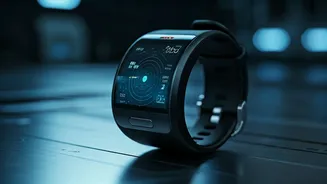






Mission Health Monitor
The Artemis II mission, slated for launch on April 2, 2026, introduces a pivotal piece of technology: the ARCHeR wristband. This compact device, an acronym
for Artemis Research for Crew Health and Readiness, serves as a sophisticated scientific instrument to meticulously track astronaut well-being throughout their 10-day circumnavigation of the Moon. Developed in collaboration with NASA's partners, the research aims to gain critical insights into astronaut sleep patterns, stress levels, cognitive capabilities, and team dynamics. Functionally, it operates as an advanced activity and sleep monitor, drawing parallels to commercial fitness trackers but engineered with specialized adaptations for the demanding environment of spaceflight. This initiative is particularly vital as Artemis II represents the first crewed expedition beyond low Earth orbit since the Apollo era and marks the maiden voyage for astronauts within the Orion spacecraft. The data gathered will be instrumental in deciphering how astronauts cope with extended missions, maintain team cohesion at significant distances from Earth, and assess the efficacy of new spacecraft systems under pressure.
Beyond Earth Orbit
As the four Artemis II astronauts prepare for their historic flight, they will be equipped with more than just cutting-edge spacecraft; they will also don the ARCHeR wristbands, a critical scientific tool designed to capture intricate physiological and psychological data. This high-tech band is engineered to record internal bodily and mental states, extending its monitoring capabilities far beyond the familiar confines of low Earth orbit. Unlike missions that maintain proximity to our planet, Artemis II's trajectory will carry the crew around the Moon and back over approximately 10 days. This journey will expose them to heightened levels of isolation, confinement, and radiation compared to previous decades of space travel. Understanding the human body's adaptation to these intense conditions is paramount for NASA's ambitious goals of enabling safe, long-duration human missions to the Moon and, ultimately, to Mars.
Data Collection & Analysis
According to NASA's Human Research Program, the ARCHeR wristbands are designed for continuous data acquisition, meticulously logging movement and sleep cycles while the crew is aboard the Orion spacecraft. This provides researchers with immediate, real-time information regarding the impact of deep-space conditions on astronaut rest and physical activity. Complementing the wristband data, astronauts will also engage in a series of cognitive tests and behavioral assessments conducted both prior to and following the mission. This comparative approach allows scientists to rigorously evaluate how the crew's functional performance changes between terrestrial conditions and the profound environment of deep space. The very name, ARCHeR, encapsulates its fundamental purpose: to conduct crucial research focused on enhancing the health and readiness of the Artemis crews, ensuring their safety and efficacy for the challenging voyages ahead.