





Origins of a Vision
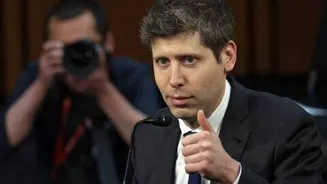
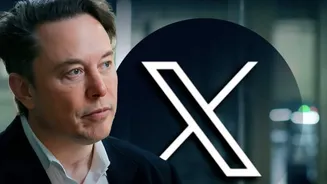
The foundation of OpenAI was laid in 2015, stemming from an email exchange between Sam Altman and Elon Musk. Altman proposed an ambitious 'Manhattan Project
for AI,' envisioning the creation of powerful artificial general intelligence (AGI) to be shared globally through a non-profit entity. Musk readily agreed to discuss the idea, recognizing its potential significance. Together with nine other co-founders, they established OpenAI with the express purpose of developing AGI for the benefit of all humanity. This initiative aimed to prevent a single entity, such as Google which held a significant lead in AI development at the time, from dictating the future trajectory of AI and its impact on humankind. A cornerstone of their initial commitment was the pledge to freely disseminate their AI advancements as open-source software, ensuring widespread access and collaborative development. This foundational period was characterized by a shared idealistic vision to steer AI towards a positive and inclusive future for the entire human race.
Seeds of Discord
By 2017, the initial harmony within OpenAI began to fray, signaling growing divergences in strategy and belief between key figures. A segment of the organization, including Musk, started to question the safety implications of open-sourcing highly advanced AI, fearing it could pose greater risks than a more controlled, closed ecosystem. Concurrently, concerns arose about the financial feasibility of achieving their ambitious AGI goals solely through a non-profit model, as substantial funding would be required. Musk proposed a collaborative approach, suggesting that OpenAI leverage Tesla's burgeoning supercomputer infrastructure for AI development. However, this proposal, along with his desire for greater control, was reportedly met with resistance from Altman and other leaders. This divergence in vision and decision-making ultimately led to Musk's departure from OpenAI's board and his withdrawal of financial backing. Following this exit, OpenAI sought alternative funding avenues, eventually establishing a for-profit subsidiary and securing significant investment, notably $13 billion from Microsoft, while also scaling back its open-source initiatives.
Musk's Allegations Detailed
In 2024, Elon Musk initiated legal proceedings against OpenAI, presenting a case that the company, under the leadership of Sam Altman and other executives, had fundamentally deviated from its humanitarian mission, prioritizing financial gain instead. Musk's lawsuit asserts that Altman and Greg Brockman, a co-founder and president, deliberately misled him and other stakeholders. He contends they falsely promised a development path for AI that was safer and less profit-driven than that of giants like Google and Microsoft. Supporting evidence emerged through documents unsealed during the discovery phase, including diary entries by Brockman. These entries apparently reveal internal doubts about Musk's exclusion from OpenAI and the commitment to a purely non-profit structure. One notable entry expressed a reluctance to commit to the non-profit model, hinting at the possibility of transitioning to a 'B-corp' structure later, suggesting a potential insincerity from the outset. Brockman also wrote about his aspiration to become a billionaire. Musk's legal team points to these writings and other unearthed documents as proof that OpenAI's leadership had plans to adopt a for-profit model well before publicly announcing such intentions, thereby deliberately deceiving him and other early supporters. Judge Rogers herself cited Brockman's diary entries as sufficient evidence that Musk had indeed been misled, paving the way for the case to proceed to trial.
OpenAI's Defense
OpenAI's primary defense strategy centers on the assertion that Elon Musk himself attempted to steer the non-profit lab towards a commercial enterprise prior to his departure in 2018. Court documents released as part of the ongoing legal dispute suggest that in 2017, Jared Birchall, who manages Musk's family office, registered a company named 'Open Artificial Intelligence Technologies.' This entity was apparently intended to serve as a for-profit counterpart to OpenAI. In their legal filings and public statements, OpenAI contends that Musk's actions and statements demonstrate his desire for a commercial structure. The company stated in a blog post titled 'The truth Elon left out' on January 16, 2026, that Musk not only wanted a for-profit model but actively worked to establish one as OpenAI's proposed new structure. They further allege that Musk expressed a desire to accumulate $80 billion to fund a self-sustaining city on Mars, believing he deserved majority equity and full control due to past experiences. OpenAI also claims Musk's vision extended to his children controlling AGI, a surprising revelation during succession discussions. Additionally, OpenAI accuses Musk of actively attempting to hinder their progress while concurrently developing his own competing AI ventures. It is worth noting that since October 2025, OpenAI operates as a for-profit public benefit corporation (PBC), overseen by its original charitable arm, which also holds substantial shares in the PBC. While OpenAI initially proposed eliminating the non-profit's oversight, they later reversed this stance following considerable backlash from advocacy groups.
Trial's Potential Impact
The ongoing trial, presided over by Judge Yvonne Gonzalez Rogers with a nine-person jury, will determine the outcome of Musk's claims against OpenAI. Notably, Judge Rogers dismissed Musk's fraud allegations on April 24, meaning the trial will focus solely on Musk's claims of breach of charitable trust and unjust enrichment. Should the court rule in Musk's favor, he is reportedly seeking substantial damages, estimated at $150 billion, with the proceeds intended for OpenAI's charitable arm. His legal team has stated the aim is to recover assets taken from a public charity and prevent responsible parties from repeating such actions. Furthermore, Musk has requested the court remove Sam Altman from OpenAI's board and compel the company to reverse its transition to a for-profit PBC. Granting these remedies could significantly impact OpenAI, potentially jeopardizing its anticipated initial public offering and benefiting competitors like Anthropic and Google. Conversely, an acquittal for OpenAI would allow it to continue operating as a for-profit entity and pursue its ambitious data center expansion plans, which are projected to cost hundreds of billions of dollars. The company has already grown to over 4,000 employees globally. Judge Rogers emphasized that the trial's resolution hinges on the jury's assessment of witness credibility, a crucial element as OpenAI and Microsoft's attempts to dismiss the lawsuit were rejected.