






Global Names Aboard Orion
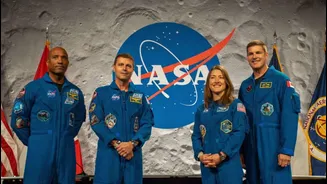
The Artemis II mission is poised to carry more than just its four-person crew; it will also transport a digital repository filled with the names of over
5.6 million people worldwide. This endeavor stems from NASA's "Send Your Name to the Moon" campaign, a deliberate effort to make space exploration a more shared and accessible experience. At a time when humanity is preparing for a significant return to deep space after a considerable hiatus, this initiative marks a philosophical shift in how such missions are perceived. They are no longer solely viewed as technical triumphs but as collective achievements that bind millions to the journey beyond our planet. This inclusive approach is a cornerstone of the Artemis program, aiming to foster a sense of global participation and ownership in humanity's cosmic aspirations, bridging the gap between everyday life on Earth and the vastness of space.
Engaging Millions Worldwide
NASA's decision to involve people globally transcends mere promotional tactics; it's a strategic pillar of public engagement. Unlike missions during the Cold War, the Artemis program is designed for a hyper-connected and transparent era, where public involvement is both anticipated and a valuable asset. The "Send Your Name to the Moon" campaign invited submissions from every corner of the globe, enabling individuals to register their names and receive a digital boarding pass for Artemis II. The response was overwhelming, with millions participating within a short timeframe. The final tally of 5.6 million represents confirmed entries during a specific submission period, underscoring the immense and sustained public fascination with human spaceflight beyond Earth's orbit. This initiative builds on the success of similar projects, such as the Mars 2020 Perseverance Rover mission, which also carried millions of names etched onto microchips, reinforcing the growing trend of participatory space exploration and highlighting the profound connection between humanity and its ventures into the cosmos.
Digital Archives in Space
To accommodate the vast number of submitted names, NASA has employed a remarkably simple yet effective technological solution: storing them on a compact SD card. This memory card is securely placed aboard the Orion spacecraft, the vehicle tasked with transporting the Artemis II astronauts on their lunar circuit. Orion, designed for deep-space human missions, will carry this digital archive alongside its other critical components. The names are stored as plain text files, illustrating how a minuscule storage device can hold an immense volume of data, easily accommodating millions of individual entries. This method of data storage is both efficient and scalable, demonstrating how modern technology can facilitate meaningful participation in space missions on an unprecedented scale, ensuring that each name represents a tangible connection to this historic journey around the Moon.
Artemis II's Core Objectives
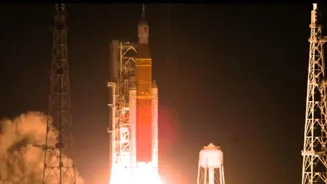
The Artemis II mission, while not a lunar landing endeavor, represents a pivotal and indispensable step toward achieving that ultimate goal. It marks the inaugural crewed flight of NASA's advanced Orion spacecraft, propelled by the formidable Space Launch System (SLS) rocket. This multi-day mission will send its four-person crew on a trajectory that loops around the Moon, providing crucial data and testing before their return to Earth. Key objectives include a powerful ascent aboard the SLS, the most potent rocket currently in operation, a flight path extending thousands of kilometers beyond the Moon to evaluate deep-space performance, and a high-speed atmospheric re-entry designed to rigorously test the spacecraft's heat shield under extreme conditions. These comprehensive tests are vital for validating the systems and procedures necessary for future missions that aim to land astronauts on the lunar surface and establish a sustained human presence.