







The Myth of Right-Handedness
Many parents, conditioned by the norm of right-handedness, often question why their child favors their left hand. This concern isn't typically rooted in
scientific understanding but rather in societal perceptions and outdated beliefs. The idea that being left-handed might lead to future difficulties in writing, daily tasks, or even social acceptance is a common, albeit unfounded, worry. Relatives might suggest 'training' a child to use their right hand, believing it will simplify their life or align them better with social expectations. This widespread notion, however, overlooks the biological basis of handedness and its implications for a child's development. The focus often shifts from the child's natural inclination to a desire for conformity, driven by the majority's right-handedness.
Science Debunks the Deficiency
Contrary to popular myths, modern scientific research indicates that left-handedness is not a deficiency but rather a natural variation linked to brain lateralization. This neurological phenomenon describes how different functions are predominantly controlled by one hemisphere of the brain. Extensive studies comparing the cognitive abilities, academic achievements, and skill development of individuals have consistently shown no inherent disadvantage for those who are left-handed. The prevalence of right-handedness in the population has historically led to a perception of left-handedness as 'different,' but science clarifies that this difference does not equate to being less capable. The brain's organization for left-handers is simply a distinct, yet equally effective, pattern.
Expert Guidance on Lefties
Pediatric neurologists strongly advise against forcing a child to change their dominant hand. Dr. Arif Khan, a Dubai-based pediatric neurologist, emphasizes that such coercion can disrupt a child's natural coordination, potentially impacting their writing, learning processes, attention span, and overall confidence. His direct recommendation is a clear 'no' to altering a child's left-handed preference. For parents concerned about their left-handed child facing life's challenges, a look at highly successful individuals across various fields – from politics and technology to arts and sports – reveals many prominent lefties. This list includes iconic figures like Bill Gates, Barack Obama, Sachin Tendulkar, Rafael Nadal, and Justin Bieber, underscoring that left-handedness has no bearing on achieving great success.
Supporting Your Left-Handed Child
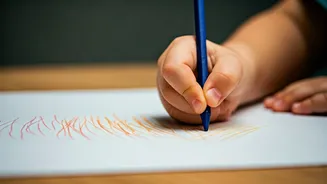
Once the scientific evidence is understood, parents can shift their focus from correction to support. Recognizing that a left-handed child's needs may differ from their right-handed peers is crucial. Instead of attempting to change their natural inclination, experts like Dr. Arif suggest providing appropriate tools and allowing for natural development. This might include specialized items such as smudge-resistant pens or quick-drying ink, and left-handed scissors. Classroom seating arrangements can also be a consideration. Open communication with the child about any specific challenges they encounter is paramount. Beyond physical tools, perhaps the most valuable asset parents can offer is awareness and acceptance of their child's unique handedness, fostering an environment where they can thrive authentically.