





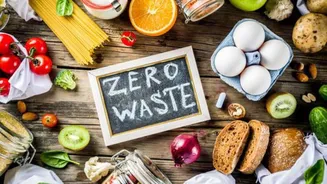


Nature's Preservation Arsenal
Imagine a world without a refrigerator. For millennia, people thrived by ingeniously leveraging natural elements to safeguard their provisions. The core
principle revolved around creating environments inhospitable to spoilage-causing microorganisms. Salt played a pivotal role by drawing out moisture, a vital ingredient for microbial life. Similarly, smoking foods introduced natural antimicrobial compounds and further reduced water content. Drying, whether by the sun or air, was another effective strategy to strip away moisture. Fermentation, a complex biochemical process, not only preserved food but also enhanced its flavor and nutritional value, giving us staples like yogurt, pickles, and kimchi. These methods weren't random; they were sophisticated systems honed over generations, finely tuned to local climates and available resources, ensuring communities had access to sustenance year-round. Coastal dwellers mastered fish drying, while those in colder regions perfected vegetable fermentation, demonstrating a profound understanding of their environment.
Risks in Traditional Storage
While these ancient preservation techniques were remarkably effective, they were not without their inherent risks. The absence of precise temperature control and strict hygiene standards meant that foodborne illnesses were a common occurrence. Factors such as inadequate ventilation in storage areas, dimly lit pantries, and the practice of leaving leftovers at room temperature posed constant threats. Even with the best intentions and practices, a lapse in vigilance could quickly lead to spoilage and sickness. These methods, while vital for survival, demanded a deep, intuitive understanding of food and its vulnerabilities, a knowledge that was passed down through generations but could still falter under less-than-ideal conditions. The precarious balance between preservation and spoilage was a daily reality.
The Refrigeration Revolution
The 20th century ushered in a paradigm shift with the widespread adoption of refrigeration, canned goods, and artificial preservatives. This technological leap dramatically improved food safety and availability, making a wider variety of foods accessible year-round and simplifying meal preparation. However, this convenience came at a cost. A significant portion of the population gradually lost touch with the fundamental principles of food preservation and the origins of their food. The intricate knowledge of how to keep food fresh using natural methods faded as reliance on modern appliances grew. This detachment also extended to global food supply chains, where food now travels vast distances, making provenance and proper storage more challenging to monitor, necessitating advanced tracking systems like blockchain to ensure safety and transparency.
Modern Echoes of Ancient Wisdom
Interestingly, contemporary food innovation is increasingly circling back to embrace and formalize these age-old preservation strategies. Modern advancements are not replacing traditional logic but are instead enhancing it with sophisticated technology. For instance, smart packaging now incorporates biosensors capable of detecting spoilage in real-time, mirroring the keen senses of ancient food handlers. Innovations in materials science and artificial intelligence are being employed to meticulously control atmospheric conditions like gas and humidity in storage environments, replicating the benefits of cool, airy storage spaces with unprecedented precision. Even appliances like the microwave are being re-evaluated; once criticized for promoting convenience over care, they are now recognized for their energy-efficient ability to quickly heat food, aligning with the resourcefulness of traditional practices.
Young Generations Embrace Preservation
A growing movement among younger generations, including millennials and Gen Z, is breathing new life into traditional food preservation techniques. The surge in popularity of fermentation kits and the widespread adoption of sourdough baking during recent times highlight a deep-seated interest. This revival is driven by a confluence of concerns: a desire to combat food waste, a need to manage household budgets more effectively, and a growing awareness of environmental sustainability. Learning to pickle, ferment, or simply salt and dry foods connects these generations to a continuum of knowledge that was nearly lost. This resurgence also dovetails with sustainable agriculture, where agroecological farming practices reduce reliance on chemicals and support natural water cycles, producing raw ingredients ideal for traditional preservation and promoting soil health.