
Beyond the Office
Historically, workwear in India has often been dictated by societal norms and expectations, sometimes resulting in a lack of individual expression. The
conventional choices often lacked adaptability or the ability to project a sense of personal style. The rise of power suits, however, represents a departure from these constraints, allowing women to craft a visual statement that balances professionalism with personal flair. This transformation goes beyond mere clothing; it signifies a broader acceptance of individuality and a celebration of diversity in the workplace. Women are now choosing outfits that reflect their personalities, leading to a shift in how they are perceived and how they perceive themselves. This also encourages an environment of empowerment where women feel confident and in control, both in their professional and personal lives.
Suiting Up: Evolution
The journey of power suits in India has been a fascinating one, evolving from a symbol of Western influence to a dynamic representation of modern Indian women. Early adaptations of suits were often more rigid, mimicking Western styles. Over time, designers and wearers have begun to embrace local influences, incorporating Indian fabrics, colors, and design elements. This blending of global trends with local aesthetics has resulted in unique, individualized power suits that are distinctly Indian. The modern iteration of the power suit prioritizes comfort, fit, and versatility. Women now have the liberty to select suit styles that resonate with their individual preferences and the nature of their work environment, showing a more relaxed style that empowers women to navigate diverse professional settings while showcasing their authentic selves.
Fabric, Design, & Details
The materials and details of the modern Indian power suit showcase a deep understanding of both tradition and contemporary trends. Traditional Indian textiles, like silk, khadi, and handloom cotton, are being artfully integrated into suit designs, creating a unique fusion of cultural heritage and contemporary style. The cut and fit of the suit have also undergone significant changes. Designers are now more inclined toward incorporating flattering silhouettes that complement the Indian body type. This includes a focus on customized tailoring, allowing women to create suits that perfectly suit their measurements and tastes. Embellishments such as intricate embroidery, subtle beadwork, and carefully selected buttons and accessories are all employed to create sophisticated pieces that reflect the wearer's personality and status.
Power Dressing: Impact
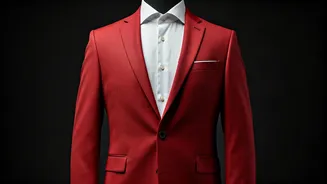
The impact of power suits on Indian women's workwear extends far beyond mere aesthetics, impacting how they are perceived in their careers and society. The act of wearing a well-tailored, expressive suit can boost confidence, giving women a sense of self-assurance as they navigate professional environments. It also sends a clear message of professionalism and authority, often helping them command respect and be taken seriously. The power suit has also played a crucial role in challenging gender stereotypes and breaking down barriers in male-dominated industries. By adopting and adapting this traditionally masculine garment, women are demonstrating their capacity to operate on equal terms and achieve success in various fields. This sartorial shift has led to more inclusive workplace environments.
From Boardroom to Beyond
The adaptability of power suits allows them to function in multiple settings. These outfits can easily transition from the boardroom to social events. A classic suit can be elevated with statement accessories, like a bold necklace or a colorful scarf, for after-work gatherings. A blazer can be paired with tailored trousers or a skirt for a more relaxed setting. The versatility of the power suit supports women in every aspect of their lives, helping them look put together and feel confident, no matter the occasion. This adaptability not only reflects the evolving needs of modern Indian women but also supports their multiple roles as professionals, family members, and individuals with varied social lives.
Looking Ahead
As Indian fashion continues to evolve, the future of workwear looks promising. We can expect to see further experimentation with design, fabric, and personalization, with suits becoming even more representative of individual identities. The incorporation of sustainable and ethical practices in textile production will likely gain importance, as consumers become increasingly conscious of the environmental and social impacts of their fashion choices. The power suit's development also points to a broader transformation in workplace culture, where diversity, inclusion, and the empowerment of women are celebrated. Workwear of the future will probably continue to embrace both form and functionality, thus shaping a dynamic landscape where clothing becomes a significant form of self-expression and a symbol of professional success.