






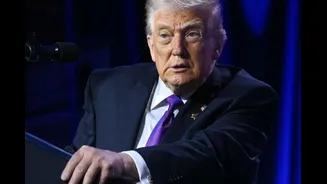
Trump's Second Amendment
Donald Trump's recent comments have brought the Second Amendment to the forefront of discussions. His remarks indicate a shift toward possibly supporting
limitations on the right to bear arms, a position that has generated considerable debate. The Second Amendment of the U.S. Constitution guarantees the right to keep and bear arms, but the extent of this right has been a subject of ongoing legal and political dispute. Trump's openness to limitations marks a notable departure from the traditionally strong stance on gun rights often associated with Republican politicians. His statements have prompted a closer examination of what limitations he might support and the potential impact of such measures on gun control policies and the wider political landscape.
Understanding the Debate
The debate surrounding the Second Amendment involves complex legal and philosophical arguments. Proponents of strict gun control often emphasize public safety and the need to reduce gun violence. They argue for measures like background checks, restrictions on certain types of firearms, and red flag laws. On the other hand, those who advocate for unrestricted gun rights highlight the importance of self-defense and the right of individuals to protect themselves. They often cite the importance of gun ownership for hunting, sport shooting, and the defense of liberty. This fundamental difference in perspectives leads to ongoing disagreements about what constitutes reasonable gun control and the balance between individual rights and public safety.
Historical Context
To understand the current debate, it's crucial to consider the historical context of the Second Amendment. Originally, it was conceived in the context of a well-regulated militia, reflecting concerns about the potential for government overreach. Over time, the interpretation of the Second Amendment has evolved through court cases and societal changes. Landmark Supreme Court decisions, such as *District of Columbia v. Heller* (2008) and *McDonald v. City of Chicago* (2010), have affirmed an individual's right to bear arms for traditionally lawful purposes, like self-defense in the home. However, these decisions have also left room for reasonable restrictions, opening the door for ongoing legal challenges and legislative efforts.
Potential Limitations Explored
If Donald Trump were to support limitations on the Second Amendment, the specific measures he might endorse become critical. These could include strengthening background checks, implementing waiting periods for gun purchases, or banning certain types of firearms or accessories. He may also consider policies that restrict access to guns for individuals with a history of mental illness or domestic violence. Any such proposals would likely face significant opposition from gun rights advocates, who might argue these measures violate the constitutional rights of law-abiding citizens. The political feasibility of any limitation would depend on factors like public opinion, the balance of power in Congress, and the willingness of lawmakers to compromise.
Impact and Consequences
Any changes to the Second Amendment or related legislation would have far-reaching impacts. Stricter gun control measures could potentially lead to a decrease in gun violence, but they might also face legal challenges and resistance from gun owners. The economic effects of gun control could also be substantial, affecting the firearms industry, law enforcement agencies, and the broader economy. Furthermore, any shift in the legal landscape could influence political alignments and the strategies of both Democrats and Republicans. The issue of gun control has long been a dividing line in American politics, and any significant moves in this area would likely reshape the political landscape.