








Emotional Giants
Elephants possess a profound capacity for emotion, evidenced by their complex grieving rituals. They have been observed returning to the resting places
of deceased herd members, exhibiting a poignant stillness and a tender touching of bones. This behavior strongly suggests a deep, resonant emotional connection to their lost companions, mirroring the empathy and social awareness also found in species like humans, great apes, and dolphins. This emotional intelligence is partly attributed to the presence of spindle cells in their brains, specialized neurons that play a crucial role in processing social cues and feelings, making them incredibly sensitive and aware beings within their social structures.
The Versatile Trunk
An elephant's trunk is an anatomical marvel, boasting an astonishing collection of over 40,000 individual muscles. This incredible musculature grants the trunk unparalleled dexterity and strength, allowing an elephant to perform tasks ranging from delicately plucking a single blade of grass to effortlessly lifting immense logs. Its sensitivity is so finely tuned that it can distinguish between different textures and even scents, acting as both a primary tool for interaction with the environment and a sophisticated sensory organ. This complexity makes the trunk one of the most remarkable and multifaceted organs found throughout the animal kingdom, essential for their survival and daily activities.
Self-Awareness in Elephants
Elephants stand among a select group of animals that demonstrate a clear sense of self. They have successfully passed the mirror self-recognition test, a crucial indicator of higher-level cognitive function and self-awareness, placing them in esteemed company with dolphins and great apes. This ability to recognize their own reflection signifies a sophisticated understanding of their identity and existence in the world. It suggests they possess an internal representation of themselves, allowing for introspection and a more complex interaction with their surroundings and social dynamics.
Subterranean Communication
Communication among elephants extends beyond audible roars and trumpets. They have the remarkable ability to converse using low-frequency vibrations that travel through the ground. These infrasonic rumbles can be detected by other elephants through their sensitive feet, allowing for communication over vast distances, even when visual or auditory contact is impossible. This sophisticated system enables them to coordinate movements, warn of danger, and maintain social cohesion across their expansive territories, a testament to their advanced understanding of their environment and each other.
Memory Masters
The legendary memory of elephants is not an exaggeration. These intelligent creatures possess an extraordinary capacity to recall information for decades, most notably the locations of vital water sources and established migration routes. This deep reservoir of knowledge is crucial for their survival, especially during arid periods when finding water becomes a critical challenge. Furthermore, their exceptional memory aids in recognizing individuals, both within their own herds and from other elephant groups, fostering complex social relationships and ensuring the continuity of their communities across generations.
Tusked Dominance
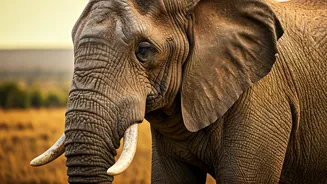
Similar to how humans exhibit a preference for using either their left or right hand, elephants often display a dominant tusk. This favored tusk, much like a dominant hand, tends to become shorter and more worn over time due to consistent use in various activities, such as digging, foraging, and defense. This subtle yet significant detail highlights a form of lateralization in their motor skills, a characteristic that is often overlooked but provides another fascinating layer to understanding their individual physical traits and behavioral patterns.