




Flame-Heated Curling Irons
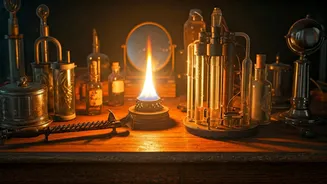
Before the convenience of electricity, achieving those coveted curls involved a rather perilous process. Curling irons of the early 1900s were literally
heated over open flames, be it on stoves or gas burners. A stylist would then manually wrap a lock of hair around the heated metal. The critical issue here was the complete lack of temperature control, making burns on the scalp and hands a common occurrence. Beyond personal injury, these devices posed significant fire hazards and often resulted in severe hair damage, a far cry from the gentle styling tools we know today.
The Permanent Wave Machine
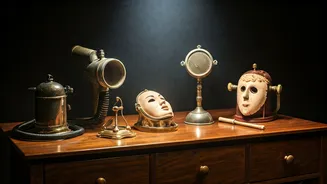
The quest for long-lasting curls led to the creation of the 'permanent wave machine,' a device that sounds more like a medieval torture instrument than a beauty tool. This contraption featured a chandelier-like structure with heated metal rods suspended above the head. The process involved applying heat and chemicals to restructure the hair, aiming for perennially curled locks. However, these sessions were notoriously lengthy, often exceeding six hours. The significant risk of severe burns and extensive hair damage made this a truly hazardous endeavor, a stark reminder of the experimental nature of early beauty technology.
The Chin Beautifier
A peculiar device designed to sculpt the jawline, the 'chin beautifier' was strapped around the head and chin. Its purported function was to slim the jaw, reduce the appearance of a double chin, and refine the overall facial contours. The mechanism relied on constant pressure and compression, essentially treating the face like malleable clay. While it might have offered a temporary contouring effect, often aided by tape, this method did not permanently eliminate fat and carried the risk of discomfort or altered facial structure due to prolonged mechanical force. It stands as a testament to the era's ambitious, albeit peculiar, approaches to facial aesthetics.
The Vacuum Hair Dryers
In an era before widespread access to sophisticated hair dryers, early 1900s technology led to a rather unconventional solution for drying wet hair. Imagine sitting beneath a large machine while vacuum cleaners, attached to hoses, worked to draw air through them. This process aimed to dry the hair by pulling moisture away. However, the results were often uneven drying, a lack of portability, and inherent safety concerns associated with manipulating vacuum technology for personal grooming. Instead of achieving a styled look, this method frequently left hair frizzy and unmanageable.
The Dimple Maker
American inventor Isabella Gilbert devised a spring-loaded cheek press, a contraption aimed at creating permanent dimples for women. This gadget tapped into the societal desire for these charming facial features, but its effectiveness was highly questionable. While Gilbert's invention was one of the first attempts, numerous similar pressure-based devices emerged in subsequent years. However, the vast majority of these pressure-centric beauty tools proved to be largely ineffective and, more worryingly, posed significant health risks, highlighting the often unscientific and potentially harmful pursuit of beauty ideals.