
A Moment in Fashion
The 16th India-European Union Summit marked a significant occasion in the relationship between India and the European Union, and Ursula von der Leyen's
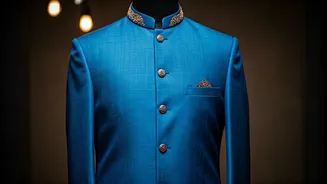
choice of attire proved to be a notable aspect of the event. She selected a blue bandhgala, a traditional Indian garment, for her visit. The choice was particularly striking because it showcased her appreciation for Indian culture. The bandhgala’s design and color palette were carefully considered, making her appearance both respectful and stylish. This sartorial decision garnered attention, turning a diplomatic event into a fashion moment that resonated with observers and fashion enthusiasts alike. The selection highlighted the importance of cultural understanding and the power of fashion to communicate respect and solidarity.
Anamika Khanna's Touch
The bandhgala worn by Ursula von der Leyen was designed by Anamika Khanna, a renowned Indian designer celebrated for her fusion of traditional Indian aesthetics with contemporary styles. Khanna's creations often blend classic tailoring with modern silhouettes, and her use of rich fabrics and intricate detailing is a hallmark of her work. The choice of Khanna as the designer underscored a conscious effort to integrate Indian design into the event. It symbolized a respectful gesture to the host nation. This collaboration brought Indian craftsmanship to a global stage and also presented a unique opportunity to showcase India's fashion talent. The attire wasn't simply a garment; it was a statement reflecting a blend of cultures, celebrating the convergence of Indian tradition and international diplomacy.
Blue Bandhgala Details
The specific details of the blue bandhgala are crucial in understanding its significance. While the exact details like fabric and embellishments are not detailed in the context, the choice of the blue color is worth noting. Blue often symbolizes trust, loyalty, and stability, all of which are essential in diplomatic relations. Furthermore, the bandhgala's design is usually characterized by its close-fitting, buttoned-up style, which adds a degree of formality and elegance suitable for the occasion. The ensemble's overall appearance would likely have been carefully coordinated with other elements, such as accessories, to produce a sophisticated and harmonious look. The choice of the blue bandhgala by von der Leyen was also a symbol of respect, adding a layer of cultural significance.
Significance of Raj Ghat
Ursula von der Leyen's visit to Raj Ghat, the memorial of Mahatma Gandhi, further enriches the context of her appearance. Raj Ghat is a location of enormous significance in India, representing the values of peace, non-violence, and national pride. Von der Leyen's choice to pay tribute at this site demonstrated a deep respect for Indian history and culture. By wearing an Indian-designed bandhgala while visiting such a significant place, she combined respect for Indian traditions with a modern fashion-forward approach. The selection of the outfit for the event indicated more than just style; it represented an affirmation of shared values and a commitment to stronger relations. This fashion choice was a symbolic gesture of friendship and mutual appreciation.