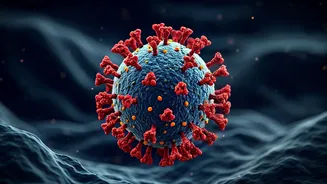









What Are Coronaviruses?
Coronaviruses, a large and diverse group of viruses, derive their name from the distinctive crown-like spikes adorning their outer surfaces, a feature
evident under microscopic examination. These viruses have been recognized in human populations since the 1960s, though the vast majority circulate primarily among animals, including species like bats, camels, cats, and pigs. Their zoonotic nature means they can transmit from animals to humans, and in some instances, they evolve the capacity for human-to-human transmission, leading to wider outbreaks. While many coronaviruses cause mild ailments akin to the common cold, others can lead to more severe respiratory illnesses such as MERS (Middle East Respiratory Syndrome) and SARS (Severe Acute Respiratory Syndrome), highlighting the significant public health implications associated with this viral family.
The Emergence of SARS-CoV-2
The emergence of a novel strain, SARS-CoV-2, marked a significant global health event. First identified in late 2019 within a seafood and poultry market in Wuhan, China, this new coronavirus had not been previously observed in humans. Its rapid spread highlighted the potential for novel pathogens originating in animal populations to jump to humans and then disseminate extensively. The subsequent global pandemic caused by this virus, known as COVID-19, underscored the interconnectedness of human and animal health and the critical need for robust global surveillance and response mechanisms to manage emerging infectious diseases effectively. The rapid identification and sequencing of SARS-CoV-2 allowed for swift research into its characteristics and the development of diagnostic tools and potential treatments.
Recognizing COVID-19 Symptoms
The manifestation of COVID-19, the disease caused by SARS-CoV-2, typically presents with a range of symptoms that can appear anywhere from two to fourteen days following infection. The most frequently reported indicators include a persistent dry cough, a feeling of breathlessness or shortness of breath, and an elevated body temperature or fever. While these are the most common signs, individuals may also experience other less typical symptoms, such as fatigue, muscle aches, a sore throat, or a loss of taste or smell. The incubation period can vary, meaning an infected person might be asymptomatic for a period while still capable of transmitting the virus. Understanding these symptoms is crucial for early detection and timely medical intervention, which can help mitigate the severity of the illness and reduce onward transmission.
Understanding Transmission Dynamics
The transmission of the virus responsible for COVID-19 occurs primarily through respiratory droplets expelled when an infected individual coughs, speaks, sings, or breathes. These tiny droplets can be inhaled by individuals in close proximity, generally within a one-meter radius of the infected person. Furthermore, the virus can survive on surfaces and objects, meaning transmission can also occur if a person touches a contaminated surface and then touches their eyes, nose, or mouth. Current estimates suggest that an infected individual can, on average, transmit the virus to between two and three other people, underscoring the highly contagious nature of SARS-CoV-2. This efficient person-to-person spread necessitates public health measures such as social distancing, mask-wearing, and diligent hand hygiene to curb its dissemination.