







The Slit Pupil Puzzle
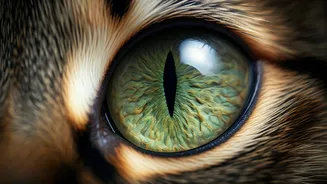
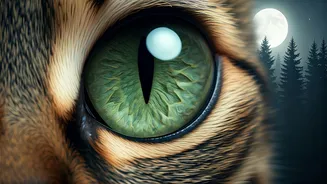
The captivating vertical slit pupils found in domestic cats, a feature shared by snakes but absent in large cats like lions and tigers, are a prime example
of convergent evolution. This means different species independently develop similar physical traits because they face comparable environmental pressures and survival challenges. While the visual resemblance to snake eyes is striking, the underlying purpose for cats is rooted in their specific predatory lifestyle. These narrow slits are not merely for show; they are finely tuned instruments that enhance a cat's ability to stalk, ambush, and capture prey, particularly in the dim light conditions where they often operate most effectively. This specialization highlights the intricate ways nature crafts solutions for survival, adapting features to optimize an organism's interaction with its environment and its role within the ecosystem.
Hunting Precision Perfected
Domestic cats, being adept ambush predators, rely heavily on stealth and explosive bursts of speed to secure their meals. The vertical pupil shape is instrumental in refining their hunting capabilities, especially when it comes to accurately judging distances. In bright daylight, these slits can contract to an extremely narrow aperture, effectively limiting the overwhelming amount of light that enters the eye. This precision light control is far more efficient than the mechanism in round pupils, preventing overexposure. Conversely, during the twilight hours or in dimly lit environments, the pupils expand into wide circles, maximizing the intake of available light. This dual capability grants cats exceptional vision in low light, which is crucial for their crepuscular hunting habits, allowing them to be most active and successful at dawn and dusk.
Depth Perception Advantage
Beyond managing light intensity, the vertical slit pupils play a critical role in enhancing a cat's depth perception, particularly at close ranges—the exact distance required for a successful pounce. Researchers have indicated that this unique pupil shape aids the brain in processing spatial information with remarkable speed and accuracy. This allows a cat to precisely gauge the distance to its intended prey, be it a scurrying mouse or a fluttering bird, and time its strike with absolute precision. Such an advantage is paramount for a predator that depends on a swift, accurate strike to ensure a meal. The ability to quickly and reliably interpret spatial cues is a significant evolutionary benefit for small, agile hunters.
Big Cats' Different Needs
Interestingly, the vertical slit pupil adaptation is more prevalent in smaller cat species, such as domestic tabbies and lynxes, rather than their larger, more formidable relatives like lions and tigers. This divergence in pupil shape is linked to the distinct hunting strategies and environmental conditions these different-sized felines encounter. Larger cats typically engage in diurnal hunting, meaning they are more active and hunt during the day. Their strategies often involve cooperative hunting or ambushes that require less hyper-precise, short-range depth perception. Consequently, their round pupils provide sufficient visual acuity and light management for their hunting styles and environments, without the specialized requirements that necessitate vertical slits.
Convergent Evolution's Art
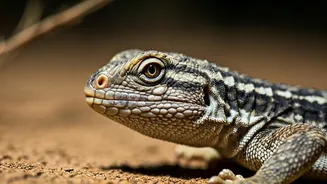
The shared trait of slit-like pupils between cats and snakes, despite their vast evolutionary distance, is a striking illustration of convergent evolution. This phenomenon demonstrates how unrelated species can independently develop similar solutions to similar survival challenges. In snakes, vertical pupils similarly assist in depth perception and provide camouflage benefits during their low-light hunting activities. For both species, this adaptation has been shaped by the selective pressures of their ecological niches, leading to a visually similar yet independently evolved anatomical feature. It's a testament to nature's ingenuity in finding effective strategies for life, even across disparate branches of the evolutionary tree.