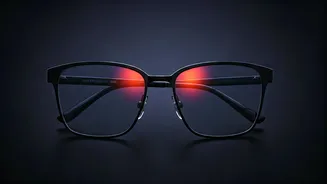

Bifocals: A Bygone Era?
For years, bifocals have served as a common solution for individuals facing age-related vision changes. These glasses are designed with two distinct sections
to help people see close up and far away. However, they aren't always ideal. Users often face challenges, like the need to tilt their heads to find the correct focal point or the abrupt shift in focus between the upper and lower lenses. The visual disruption can sometimes lead to eye strain and discomfort. The introduction of autofocus glasses seeks to address these drawbacks and present a more streamlined and adaptive method for visual correction.
Autofocus Explained Simply
The core of the technology relies on sophisticated sensors and micro-adjustments within the lenses. These sensors continuously assess the wearer's visual needs. They then dynamically adjust the lens's focus to match the distance of the object being viewed. This process happens in real-time, meaning the focus changes instantaneously as the user's gaze shifts. The glasses provide a smoother, more seamless visual experience. The technology's ability to adapt ensures that the user maintains optimal clarity regardless of what they are looking at, eliminating the need for any conscious adjustment on their part.
Adapting to Your Eyes
Unlike traditional glasses, which offer a static prescription, autofocus eyewear caters to the ever-changing focus needs of the user. This innovative approach offers a more personalized vision correction system. The adaptability becomes particularly beneficial in situations where focus changes frequently, such as reading, working on a computer, or driving. By continuously adjusting to the user's visual needs, the autofocus mechanism can reduce eye strain, improve visual comfort, and possibly even slow the progression of age-related vision changes. This dynamic approach represents a significant step forward in the personalized vision solutions space.
Beyond Vision Correction
Autofocus glasses offer the potential for additional features that go beyond simple vision correction. Manufacturers might integrate features like blue light filtering, UV protection, and even augmented reality capabilities. These supplementary features can improve the overall user experience and add convenience. By including such enhancements, these glasses can evolve from a basic corrective device into a multifunctional accessory. This innovation offers users more than just improved vision; it merges modern technology with fashion and personal wellness.
The Future of Eyewear
The advent of autofocus glasses reflects a significant shift toward smart and adaptive eyewear. As the technology matures, expect to see further improvements in size, weight, and battery life. Moreover, with the increasing integration of artificial intelligence and machine learning, these glasses could learn a user's visual preferences, and customize their performance to the individual's needs over time. This evolution opens new avenues for innovation, potentially leading to eyewear that not only corrects vision but also provides personalized visual enhancements. This progress promises a future where eyewear is not just a tool for sight, but an integral part of one's personal style and overall well-being.