





Cosmic Dust Trails
Each year, Earth embarks on its journey through a specific trail of cosmic dust, a legacy left behind by the renowned Halley's Comet. As our planet hurtles
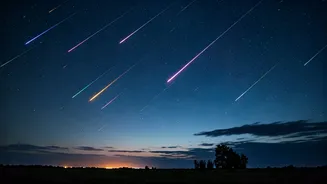
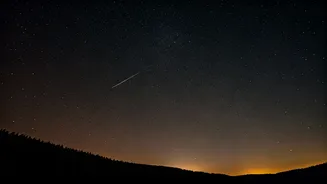
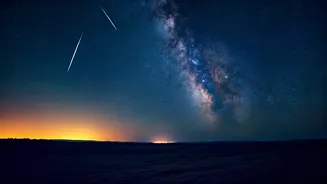
through this debris field at tremendous speeds, the tiny particles ignite upon entering Earth's atmosphere. This fiery descent creates the brilliant streaks of light we affectionately call 'shooting stars.' The Eta Aquarid meteor shower is celebrated for being one of the most visually striking and rapid meteor showers observable throughout the year, offering a spectacular, albeit brief, celestial performance. While its intensity is typically greater in the Southern Hemisphere, stargazers in India can still anticipate a memorable viewing experience under favorable atmospheric conditions.
Peak Viewing in India
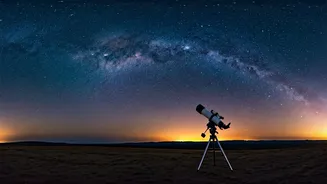
For those in India eager to witness the Eta Aquarid meteor shower, the prime viewing window is anticipated during the early morning hours of May 6. The optimal time to catch the most activity is projected to be between 3:00 AM and 5:00 AM IST, just as dawn begins to break. This pre-sunrise period is crucial because the meteor shower's radiant—the celestial point from which the meteors appear to emanate—ascends higher in the sky, significantly increasing the frequency of visible meteors. For those unable to witness the event directly due to light pollution or cloud cover, free live streams are often provided by observatories and sky-watching platforms worldwide, bringing the spectacle directly to your screens.
What to Expect
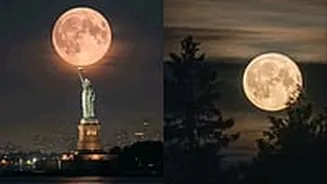
Under ideal atmospheric conditions, skywatchers in India might anticipate observing between 10 to 30 meteors each hour during the peak of the Eta Aquarid shower. However, this year's viewing prospects could be somewhat subdued due to the presence of a bright waning gibbous moon. The moonlight may obscure the fainter meteor trails, potentially reducing the visible count to fewer than 10 per hour in many locations. Despite this, the Eta Aquarids are renowned for their swiftness and their tendency to leave bright, lingering trails, ensuring that any observed meteors are likely to be particularly memorable and brilliant. To enhance your viewing, direct your gaze towards the eastern horizon just before sunrise, ideally towards a darker patch of sky roughly 30-40 degrees away from the constellation Aquarius, as meteors often exhibit longer streaks in this area.