







Personal Makeup Journeys
Actress Palak Tiwari recently recounted her childhood experiences with makeup, noting a significant difference between her skin and that of her mother,
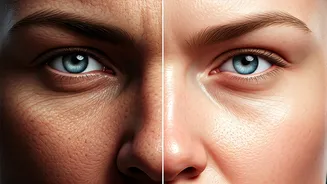
Shweta Tiwari. Palak observed that her mother possesses a naturally soft complexion, whereas her own features are more pronounced. She recalled how, as a child, makeup artists would apply techniques suited to her mother's face, which often left Palak feeling unsatisfied with the results. This led her to believe makeup wasn't for her until she began experimenting and applying it herself as she got older. She humorously admitted to 'borrowing' her mother's products regularly, leading to a consistent loss of 1-2 items from Shweta's collection, which would often turn up in Palak's school bag as she practiced her newfound skill. This personal exploration underscores the idea that makeup is a deeply individual experience, requiring a tailored approach rather than a universal application.
Makeup, Features, and Skin
Dr. Shweta Nakhawa, a Consultant Dermatologist, emphasizes that makeup application is far from a universal standard. She explains that each individual's facial features and skin type are unique, meaning a product or technique that flatters one person might not work for another. For instance, someone with softer facial contours might aim for a dewy, blended look, while someone with sharper features may prefer a different aesthetic. Furthermore, skin type—whether it's dry, oily, or combination—significantly influences how makeup appears. A foundation or concealer that works well on oily skin might look cakey or patchy on dry skin, and vice versa. This highlights the importance of understanding one's own skin characteristics to achieve the desired makeup results. The goal of makeup, Dr. Nakhawa points out, is to enhance natural beauty rather than conceal it.
Enhancing Your Features
Facial structure plays an undeniably critical role in determining effective makeup techniques. Distinctive facial characteristics such as prominent cheekbones, a well-defined jawline, fuller cheeks, or a broader forehead can all influence how makeup should be applied. Dr. Nakhawa elaborates that techniques like contouring, highlighting, and blush application need to be adapted based on these unique facial contours. Similarly, the shape and set of the eyes—whether they are hooded, deep-set, or larger—impact how eye makeup, including eyeliner and eyeshadow, will ultimately look. These subtle details are crucial for achieving a harmonious and flattering makeup application. The overarching principle is to use makeup as a tool to accentuate one's best features, ensuring they are highlighted and complemented rather than masked.
Skincare and Makeup Habits
It's common for young individuals to explore makeup, but it's equally important to prioritize skin health. Ensuring the use of high-quality makeup products and adopting proper skincare routines are paramount. Essential skincare practices include diligently removing all makeup before sleeping, cleansing the face thoroughly, and refraining from sharing makeup products with others, as this can lead to the transfer of bacteria and potential skin issues. The most effective strategy for mastering makeup is through experimentation, observation, and a deep understanding of your own skin and features. By paying close attention to your specific skin type, selecting products that complement your natural undertones, and consistently caring for your skin, you can achieve a makeup look that appears more natural and polished.