






Initial AI Consultation
The journey into AI-powered styling began with a text-based request to ChatGPT, detailing personal features like fair skin, blue eyes, and blonde hair.
The AI responded by explaining color analysis principles, including seasonal palettes and undertones, and suggested that the user likely belonged to either the 'Summer' or 'Winter' seasonal categories. It recommended cool, muted, or clear colors for Summer palettes, such as soft blues, dusty pinks, and lavender, and for Winter palettes, it suggested true blues, emerald green, and deep purples. Crucially, the AI advised against warm, earthy tones like olive green and mustard yellow, noting they could make the skin appear sallow. However, this initial assessment highlighted AI's limitations, as it couldn't visually verify the user's appearance, a key component in professional color analysis.
Visual Analysis with AI
To enhance the AI's analysis, a photograph of the user was uploaded to ChatGPT, requesting a more refined color assessment based on visual input. This approach yielded a more specific recommendation, identifying cool undertones and suggesting a palette leaning towards cool and neutral shades. The AI also noted that some warm colors might conflict with the user's natural coloring. Despite the improved accuracy with image data, the analysis still felt somewhat generalized. It lacked the in-depth, personalized touch typically provided by a human stylist, who would inquire about lifestyle, existing wardrobe, and style aspirations—elements vital for truly comprehensive color analysis and styling advice.
Hairstyle & Makeup Prompts
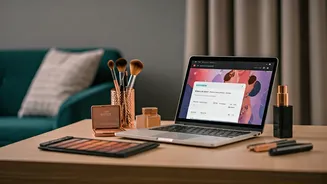
Beyond general color analysis, the experiment extended to exploring AI's capabilities in hairstyle and makeup recommendations. Specific prompts were designed to guide ChatGPT in analyzing an uploaded image for hair and makeup advice. For hairstyles, the AI was asked to categorize suggestions into 'Recommended,' 'Okay,' and 'Less Flattering,' along with styling tips. For makeup, it was tasked with analyzing skin tone, eyeshadow, lipstick, blush, and foundation shades, including advice on finishes for textured skin and makeup to avoid, while also offering a warm vs. cool comparison. This detailed prompting aimed to uncover the AI's potential to offer practical, actionable styling guidance beyond just color palettes, even on an AI-generated likeness, which proved surprisingly accurate when tested against the user's actual unfiltered photo.
The Verdict: AI vs. Human
In conclusion, while ChatGPT demonstrated a remarkable ability to provide color and style suggestions, it doesn't fully replace a professional human stylist. The AI offers a valuable starting point for general color recommendations, especially when provided with visual data. However, it falls short in replicating the nuanced understanding, personalized interaction, and holistic approach that a human expert brings. Professional stylists consider individual preferences, lifestyle, and personal style goals, offering advice that is both visually flattering and functionally integrated into a person's life. For quick, accessible insights, AI is a fun tool, but for transformative and deeply personalized styling, human expertise remains indispensable due to its visual acuity and interpersonal understanding.