



AI Navigates Your Desktop
Anthropic's Claude 3.5 has achieved a remarkable milestone, gaining the ability to interact with a user's computer in a manner akin to a human. This significant
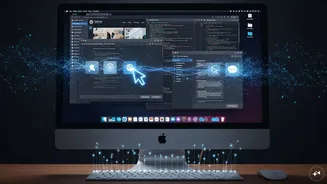
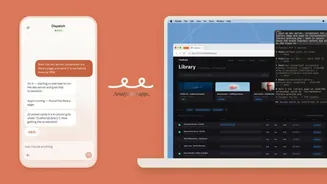
leap forward allows Claude to perform a wide array of tasks, from browsing the internet and retrieving real-time information to managing files directly from a user's hard drive. The integration is facilitated through a feature that allows users to issue commands via their mobile devices, initiating a process where Claude identifies and utilizes available application connectors, such as those for Google Calendar or Slack. In instances where a direct connector isn't present, Claude can manually execute tasks by simulating human interaction with the computer's interface. This involves actions like scrolling, clicking, typing, and moving the cursor to open files, access web browsers, and launch developer tools, effectively mimicking keyboard and mouse operations. For these manual operations, users are required to grant permission for each application Claude intends to use. This new capability, currently available as a research preview for MacOS users subscribed to Claude Pro and Claude Max plans, is branded as 'Dispatch' within the Cowork feature, enabling users to delegate tasks remotely and return to completed work.
Bridging the Gap with Vercept
The recent advancements in Claude's computer-use capabilities are partly attributable to Anthropic's strategic acquisition of Vercept in February 2026. This move was crucial for scaling AI agent performance to enterprise levels. Vercept, an AI startup, specialized in developing tools for intricate agentic operations, notably its product 'Vy', which enabled remote operation of Apple MacBooks through a cloud-based computer-use agent. While the exact financial details of this acquisition remain undisclosed, it led to Vercept's founders and several employees joining Anthropic. This integration has already borne fruit, with the first product launch occurring less than four weeks after the team's arrival. The acquisition addresses a critical need for AI models to possess not just sophisticated internal reasoning but also a grounded understanding of dynamic environments through direct interaction. Vercept's expertise in bridging this very gap made it a valuable asset for Anthropic, enhancing Claude's ability to function as a more active and integrated participant in complex digital workflows.
Evolution Beyond Conversation
Anthropic's strategic acquisitions, including Vercept and earlier, Bun, a startup focused on tools for orchestrating AI agents in production, underscore a broader vision for Claude. The integration of these distinct layers is fundamental to evolving Claude from a purely conversational AI model into a robust execution platform. This evolution is particularly significant in the context of rapidly advancing AI agents. The surging popularity of open-source frameworks like OpenClaw, which facilitates the orchestration of AI agents through structured flows, has intensified the drive towards more autonomous AI systems. Claude's new functionalities position it as a direct contender in this space, offering a potentially more streamlined and integrated solution compared to the often experimental setup required for open-source alternatives. The ability for Claude to handle tasks autonomously, from routine computer operations to code generation and test execution, signifies a shift towards AI playing a more integral and functional role in our daily professional and personal lives.
OpenClaw: The Open-Source Contender
The rising prominence of the open-source agentic framework, OpenClaw, has undoubtedly spurred innovation in the AI agent landscape. OpenClaw allows for the creation of autonomous AI agents, or 'claws', which can even spawn sub-agents to execute specialized tasks by accessing local file systems and data. Early iterations of OpenClaw, often set up on economical Mac Minis, enabled users to interact with Claude Code via platforms like WhatsApp on their phones. The open-source nature of OpenClaw has fostered a diverse ecosystem of developer projects, ranging from booking flights and controlling smart home devices to managing social media campaigns across various platforms. However, the setup process for OpenClaw can be more complex and experimental. In contrast, Anthropic's integrated approach with Claude aims to provide a more user-friendly and reliable solution that demands less technical expertise. This is particularly relevant as the demand for Mac Minis surged in China due to the OpenClaw craze, leading to stockouts, highlighting the existing infrastructure challenges associated with some open-source solutions.
Security and Future Implications
While the advancements in AI's ability to interact with computers, as demonstrated by Claude and the burgeoning ecosystem around OpenClaw, offer immense potential, they also introduce critical security considerations. OpenClaw's requirement for broad access to user data and systems to function as a personal assistant has raised concerns about potential misuse, including tampering with or deleting valuable files. These security trade-offs have driven the development of safety-focused forks and alternatives, such as Nvidia's NemoClaw, which offers security controls for setting up OpenClaw. Similarly, Claude's computer-use update, while incorporating safeguards against threats like prompt injection attacks, is not without its own risks. Anthropic has cautioned users against granting access to applications handling highly sensitive data, acknowledging that the feature is still in its early stages. The rapid progress in AI autonomy, therefore, necessitates a parallel focus on robust security measures and ethical guidelines to ensure these powerful tools are used responsibly and beneficially.