



Embrace Imperfect Beauty
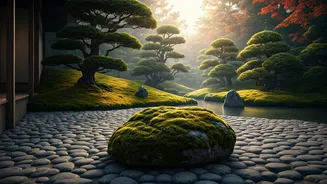
Wabi-sabi, a core Japanese aesthetic, celebrates the beauty found in imperfection, impermanence, and the incomplete. In a society that often pressures
us to strive for flawless presentations of ourselves and our surroundings, wabi-sabi provides a refreshing sense of liberation. It challenges the relentless pursuit of perfection that can fuel overthinking, reminding us that a slightly disheveled space, a mark on an object, or even a past misstep doesn't diminish the richness or validity of life. This philosophy grounds us in reality, offering solace to minds that tend to be self-critical, acknowledging that life's irregularities are not flaws but integral parts of its authentic narrative. The acceptance of these natural imperfections can be a powerful antidote to the anxiety of always needing to be 'just right.'
Mindful Eating Habits
Hara hachi bu, an ancient Japanese practice, advocates for stopping your meal when you feel approximately eighty percent full. This principle extends beyond mere dietary advice; it's a profound reminder that moderation, rather than indulgence, often leads to greater well-being. Overthinking frequently mirrors overeating, spiraling endlessly past the point of genuine satisfaction and nourishment. By adopting the spirit of hara hachi bu, we learn to recognize and honor 'enough' as a legitimate and beneficial stopping point. This concept can be applied to various aspects of life, from limiting excessive work or social media consumption to disengaging from unproductive thought loops. True peace can often be found at the edge of excess, where we consciously choose to step back.
Nature's Calming Presence
Shinrin-yoku, commonly known as forest bathing, involves deeply immersing oneself in the natural environment with full attention and presence. This practice is not about strenuous activity or reaching a specific destination; it's a deliberate, unhurried engagement with nature designed to allow your senses to fully awaken and absorb the surroundings. For individuals grappling with anxious or hyperactive minds, this offers significant benefits. Nature operates on its own unhurried rhythm – trees grow at their own pace, and the wind doesn't rush. By focusing on simple sensory inputs like the dappled light, the scent of soil, the sound of birdsong, or the feel of the air, the body naturally begins to de-escalate. Even a short period spent beneath trees can significantly reduce internal mental noise, shifting the focus away from dominating thoughts and providing mental space.
Unique Growth Timelines
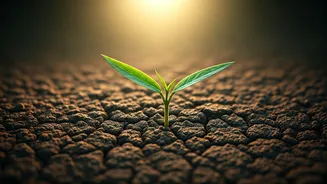
Oubaitori, inspired by the distinct blooming periods of four spring trees—cherry, plum, peach, and apricot—offers a beautiful lesson: not everything is meant to develop on the same schedule. This concept is particularly beneficial for minds prone to comparison, competition, and anxious forecasting. Overthinking often gets entangled in timelines that feel too slow, too rapid, or unfairly divergent from those of others. Oubaitori gently loosens this restrictive hold by affirming that personal growth and development are not a race with a singular, predetermined pace. Your individual journey and its timing are valid and unique, distinct from anyone else's, and still hold their own inherent worth and reality.
Highlighting Reparative Beauty
Kintsugi, the Japanese art of mending broken pottery with seams of gold lacquer, offers a profound perspective on damage and repair. Instead of attempting to conceal the fractures, kintsugi visibly highlights them, transforming the repair into an integral, beautiful part of the object's history. This philosophy is remarkably generous, suggesting that our imperfections and 'broken' parts don't need to be hidden to possess beauty. For those caught in cycles of self-recrimination, kintsugi provides an alternative narrative. It encourages shifting focus from the 'why' of a break to the potential and beauty found in the repair process, reframing rupture not as a source of shame but as a mark of resilience and continuity, offering deep comfort to a mind fixated on past failures.
Finding Your Purpose
Ikigai, often translated as 'reason for being,' encapsulates more than just a grand life mission; it speaks to the smaller, more tangible elements that bring meaning and structure to daily existence. It encompasses the work we find fulfilling, the connections we cherish with loved ones, and the routines that lend shape and rhythm to our days. For an overthinking mind, ikigai serves as a vital anchor, redirecting attention from unproductive mental chatter toward purposeful action. Instead of dwelling on hypothetical negative outcomes, it prompts the question, 'What is truly worth nurturing today?' This simple yet powerful shift redirects the mind from abstract anxieties to the concrete reality of a life being actively lived and cherished.