




Beyond Memorization
Contemporary childhood education is witnessing a significant transformation, driven by parents who observe that their children's challenge lies not in acquiring
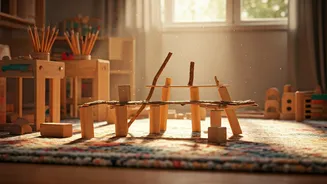
knowledge, but in sustaining interest. The prevailing approach to early learning is subtly shifting from an emphasis on simple recall and predefined outcomes towards a deeper understanding of how children genuinely engage with their environment. Consequently, learning activities at home are evolving from desk-bound worksheet sessions to dynamic, experiential endeavors. Imagine children measuring ingredients while baking, questioning the science behind rising dough, or constructing elaborate cardboard cities and exploring the structural integrity of bridges. These activities underscore a move towards learning through tangible, often delightfully messy, real-world interactions, fostering a more profound and lasting comprehension.
Engaging a Stimulated World
This paradigm shift in parenting and education isn't an accident; it's a thoughtful response to the hyper-stimulating environments children navigate today. With constant exposure to digital screens, rapid content cycles, and an unending barrage of sensory input, traditional instructional methods often struggle to capture and hold a child's attention. Parents are keenly aware of this disconnect, perceiving it not as a deficit in their child, but rather a mismatch in teaching methodologies. Nitika Dial, Co-Founder of Taabur X WonderLab, champions experience-led learning, articulating its growing importance and providing compelling reasons for its adoption. This approach proactively addresses the challenges posed by a world saturated with information by making learning an active, participatory process rather than a passive reception of facts.
Active Participation Unleashed
At its core, experience-led learning effectively supplants passive learning with active participation. Instead of merely reading about a scientific concept in a book, children now grasp it through hands-on activities like mixing colours, observing chemical reactions, or conducting simple home experiments. A geography lesson can transform into an outdoor excursion where children observe landscapes, understand directions, and gauge distances. This methodology emphasizes learning by doing, empowering children to construct their understanding through direct involvement rather than solely through auditory or visual instruction. This active engagement ensures that concepts are not just understood but truly internalized, fostering a deeper and more meaningful connection with the subject matter.
Cultivating Essential Life Skills
For parents, this evolving educational landscape signifies a broader recalibration of expectations. Early learning is increasingly recognized as more than just preparation for formal schooling; it’s fundamental to cultivating vital life skills such as curiosity, effective communication, robust problem-solving abilities, and self-assurance. These crucial competencies are not typically fostered through mere repetition or drills, but rather emerge organically through exploration, interaction, and hands-on engagement. By prioritizing these experiences, parents are equipping their children with a versatile toolkit that will serve them throughout their lives, enabling them to adapt and thrive in an ever-changing world. This holistic approach to development ensures a well-rounded foundation for future success.
Everyday Learning Redefined
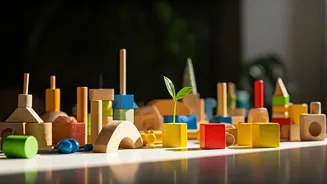
Modern parenting styles are also significantly shaping this educational direction, with many families striving for a more balanced lifestyle amidst demanding schedules and increased screen time. A growing number of households are consciously choosing to replace passive screen engagement with activities like building blocks, collaborative storytelling games, or simple do-it-yourself projects. This has led to innovative approaches to routine tasks. A grocery trip can become an engaging counting exercise, the kitchen transforms into a dynamic laboratory for measuring and observation, and a park visit evolves into an exploration of nature and physical movement. Learning is no longer confined to designated 'study time' but is seamlessly woven into the fabric of daily life, making education a continuous and integrated experience.
Shifting Success Metrics
A profound shift is also evident in how parents now define success for their children. The focus is gradually moving away from what a child has memorized towards how they approach problems and think critically. The quintessential question is evolving from a simple 'Did you get the answer right?' to a more insightful 'How did you figure that out?' Experience-led learning does not aim to replace traditional educational frameworks but rather to complement them, adding layers of depth through contextual understanding and active participation. It makes academic concepts taught in classrooms more tangible, relatable, and memorable. This approach fosters a deeper appreciation for the learning process itself, encouraging children to embrace challenges and view mistakes as opportunities for growth.
Playful Pathways to Understanding
The remarkable flexibility of experience-led learning is a key driver of its potency. It liberates children from rigid learning pathways, acknowledging that understanding can be achieved through diverse activities such as drawing, building, conversing, or experimenting. While the journey of discovery is open-ended, the learning derived from it is inherently purposeful. This approach is actively reshaping the design of learning environments, signaling a clear departure from content-heavy formats towards experience-centric ecosystems. In these dynamic settings, engagement takes precedence over mere instruction, and curiosity is celebrated as the genesis of learning rather than its ultimate conclusion. Fundamentally, this evolution is rooted in the recognition that children thrive not when passively told what to know, but when empowered to discover and learn through their own actions, creating lessons that resonate far beyond the classroom.