

Almond Oil's Gentle Touch
Often overlooked, almond oil offers a delightful lightweight alternative, especially for those who dislike heavy hair products. Its richness in vitamin
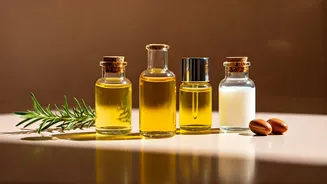
E makes it excellent for nourishing strands without a greasy sensation, a significant advantage in humid Indian climates where heavier oils can feel suffocating during warmer months. Almond oil excels at managing frizz and imparting softness, making it a favored choice for individuals with finer hair textures who want to avoid their hair feeling weighed down. It is particularly beneficial for addressing mild dryness, taming frizz, and providing daily nourishment, making hair feel more manageable and smooth. A simple trick is to warm a small amount between your palms and lightly apply it to the ends of your hair after washing to combat any lingering frizz and enhance shine.
Rosemary Oil's Popular Rise
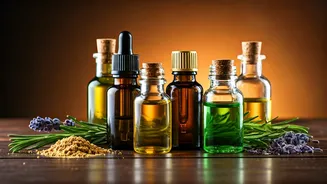
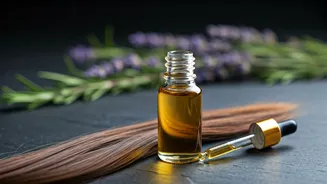
Rosemary oil has surged in popularity across social media platforms, and for good reason. Its perceived ability to enhance scalp circulation may contribute to healthier hair growth over time, making it a go-to for individuals experiencing early thinning or hair loss due to stress. However, it's crucial to remember that rosemary oil is an essential oil and should never be applied directly to the scalp. Always dilute a few drops with a carrier oil, such as coconut or almond oil, before use. Its refreshing feel without excessive greasiness is a major draw. It is particularly effective for concerns like hair thinning, weak roots, stress-induced hair fall, and oily scalps. A tip for its use: a little goes a long way; overapplication can lead to scalp irritation rather than beneficial results.
Castor Oil for Strength
Castor oil, despite its thick and sometimes challenging texture, remains a beloved ingredient for its remarkable hair-strengthening properties. Its high concentration of fatty acids helps to lock in scalp moisture, leading to fuller, shinier hair. Many also utilize it for enhancing the appearance of eyebrows and eyelashes. Applying pure castor oil can feel excessively heavy, particularly in the heat, so it's often blended with lighter oils for easier application and washing. Its primary strength lies in minimizing hair breakage, which is crucial as frequent snapping of strands can impede overall hair growth. Castor oil is best suited for thin hair, dry scalps, brittle strands, and sparse edges. A practical tip is to mix it with coconut oil for a smoother application and easier removal.
Bhringraj: The Ayurvedic King
Bhringraj oil, a cornerstone of traditional Indian haircare, is revered as the 'king of herbs' for its extensive benefits. For generations, it has been employed to combat hair fall, strengthen weak roots, and address various scalp conditions. It's frequently combined with other potent Ayurvedic ingredients like amla and brahmi in formulations to amplify its nourishing effects. Users frequently praise bhringraj oil for its remarkably soothing sensation on the scalp, providing significant relief for irritation, itchiness, heat, or stress. Its focus on deep scalp nourishment is fundamental, as a healthy scalp is the genesis of robust hair growth. This oil is ideal for managing hair fall, fortifying weak roots, calming scalp irritation, and revitalizing dull hair. For maximum benefit, leaving it overnight allows the scalp to fully absorb its beneficial properties.
Coconut Oil's Reliable Charm
Coconut oil rightly holds its esteemed status in haircare. Its long-standing use, independent of fleeting trends, is a testament to its effectiveness, particularly in India's diverse climate. It stands out because it penetrates the hair shaft, reducing protein loss—a major cause of hair weakness and brittleness—rather than merely coating the hair. If your hair feels rough, frizzy, dull, or prone to tangling, coconut oil can effectively restore its vitality. It's also highly beneficial for those who frequently subject their hair to heat styling, coloring, or chemical treatments. A warm coconut oil massage prior to shampooing can yield noticeable improvements over time through consistent application. It is exceptionally effective for dry hair, frizz, heat damage, and split ends or breakage. A time-honored Indian tip involves warming coconut oil with curry leaves for added benefits.
Mastering Hair Oiling
The effectiveness of any hair oil truly hinges on individual needs; some require scalp nourishment, others moisture, while some focus on reducing breakage, and a consistent approach is paramount. Patience is key, as significant hair growth typically requires a longer timeframe than often portrayed. While oils can foster healthier hair, their impact is amplified when combined with adequate sleep, balanced nutrition, proper hydration, stress management, and gentle hair care practices. Many unintentionally damage their hair while attempting to care for it, committing common errors such as leaving oil on for extended periods, massaging too aggressively, applying essential oils undiluted, using excessively hot water for washing, or expecting overnight results. Hair generally flourishes with gentle, consistent care rather than harsh treatments.