





Morning Commute Disrupted
Hundreds of morning commuters experienced significant disruptions today as Farringdon station, a pivotal transport hub in Central London, was compelled
to shut down. This closure was initiated following reports of a suspected gas leak within the station premises. The incident brought operations to a complete halt as British Transport Police, London Ambulance Service, and London Fire Brigade swiftly arrived on the scene to manage the developing situation. The call for assistance was received by the British Transport Police at 9:42 AM, prompted by a small number of passengers reporting that they were feeling unwell, which escalated into a full-scale emergency response and evacuation of the station.
Farringdon's Crucial Role
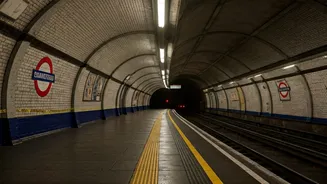
Farringdon station's importance to London's intricate transport network cannot be overstated. It serves as a critical interchange point, connecting multiple vital transit systems. The Elizabeth line, a major arterial route, passes directly through Farringdon. In addition to this, three separate London Underground lines converge at this location, making it a key point for cross-city travel. Furthermore, National Rail services operated by Thameslink also stop at Farringdon, underscoring its significance for both local and regional commuters. Consequently, any disruption at Farringdon has a cascading effect across a broad spectrum of public transport, impacting thousands of passengers daily due to its extensive connectivity.
Service Suspensions and Diversions
The suspected gas leak at Farringdon station led to immediate and widespread service suspensions across several key transport lines. Specifically, the Elizabeth line experienced a complete halt in service between Paddington and Abbey Wood, causing significant delays for travelers on this route. National Rail confirmed that Farringdon station would remain closed to all services until at least noon, with no trains stopping at the station while emergency personnel conducted their investigations. Transport for London advised Thameslink passengers to reroute their journeys and seek alternative stations. City Thameslink or London St Pancras International were recommended as viable options, with Thameslink operating services non-stop between these two stations until the situation at Farringdon was resolved and normal operations could resume.
Emergency Response and Investigation
Emergency services were actively engaged in investigating the cause of the disruption at Farringdon station. British Transport Police officers were dispatched following the reports of a potential gas leak, which was purportedly located somewhere within the station itself. The initial trigger for the emergency response was the observation that a small contingent of passengers had reported feeling unwell. As of the time the incident was widely reported, the exact nature of the issue remained under investigation. The outcome of these inquiries would determine whether the station was indeed affected by a gas leak or if another cause was responsible. Regardless of the precise reason, the incident was severe enough to warrant the closure of one of London's busiest stations, leading to considerable travel chaos across the city's public transport network.