





The Dopamine Draw
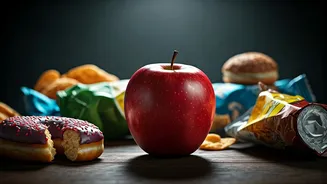
Our brains are hardwired for immediate rewards, often prioritizing short-term pleasure over long-term benefits. This is why tempting treats offer an instant
hit of dopamine, appealing directly to our reward system, while the satisfaction of a healthy choice feels distant. Neuroscientific concepts like temporal discounting explain this phenomenon, where future gains appear less significant than present gratification. To combat this, implement the '10-Minute Rule': when an impulsive urge strikes, simply wait for ten minutes. In most cases, the craving will subside, allowing you to make a more considered decision. This brief pause interrupts the automatic response and gives your rational mind a chance to catch up, preventing regrettable actions driven by fleeting desires.
Decision Fatigue's Toll
The sheer volume of daily choices, from mundane to complex, depletes our mental resources, a phenomenon known as decision fatigue. As glucose levels drop throughout the day, our capacity for sound judgment diminishes, leading to poorer decisions, particularly in the late afternoon. This is why successful individuals often streamline their daily routines; Steve Jobs famously wore the same outfit to minimize trivial choices. The solution lies in automating routine tasks. Plan your attire and key objectives the night before, and maintain a consistent breakfast. By conserving mental energy, you reserve it for more significant decisions that truly impact your life. A helpful tip for critical choices is to avoid making them late in the day, especially when hungry, as your self-control reserves are likely depleted.
FOMO's Primal Grip
The Fear Of Missing Out (FOMO) is more than a modern social media concern; it's a deep-seated survival instinct. Historically, being excluded from a group meant potential demise, triggering a primal alarm response when we perceive others experiencing something we're not. This manifests today as social anxiety and a compulsion to conform. To counteract FOMO, focus on making healthy or productive choices effortlessly accessible. If you aim to read more, keep a book by your bed and store your phone away from your primary relaxation space. For better eating habits, place nutritious foods like fruits in plain sight while hiding less healthy options in inconvenient locations. Proximity significantly influences our behavior, making us far more likely to engage with what is readily available.
Stress Mode Activation
When faced with significant stress, the logical, prefrontal cortex of our brain effectively shuts down, handing control to the more primal amygdala. This part of the brain operates on instinctual responses: fight, flight, or freeze. Consequently, under pressure, you might find yourself paralyzed by indecision or engaging in time-wasting activities as your brain attempts to protect you. To combat this, utilize 'visual anchors' – external cues that serve as a backup to your fogged memory. Simple reminders, like a sticky note on your computer screen prompting you to 'Breathe' or 'Focus on the key task,' can reorient your thinking and guide you back to strategic action when your internal panic response takes over.
Comfort Bias Resistance
Our brains possess a status quo bias, an inherent preference for the familiar, often deeming the 'devil you know' safer than venturing into the unknown. This inclination explains why we might remain in unfulfilling jobs or postpone ambitious personal projects. The amygdala perceives change as a potential threat, even if the alteration promises positive outcomes. Research indicates that the distress of losing something is felt more acutely than the joy of gaining something new. To overcome this, adopt the '2-Minute Rule.' Break down large, daunting goals into minuscule, easily achievable steps. These small actions are less likely to trigger your brain's threat response. Once you initiate the process, the resulting momentum will propel you forward, making the overall objective feel less intimidating.