





The 'Broom-like' Phenomenon
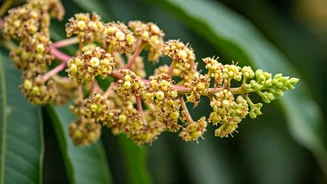
The sight of a mango tree heavily laden with what appears to be a dense, brush-like arrangement of flowers is a common occurrence in gardens across India.
These sprawling panicles, resembling soft brooms swaying in the breeze, are a natural part of the *Mangifera indica* tree's reproductive cycle. While visually striking, this abundance of blossoms is often a precursor to a significant challenge for growers: flower and fruit drop. The tree, capable of reaching impressive heights of 15-20 meters with a broad canopy, produces far more flowers than can possibly develop into mature fruits. Agricultural experts explain that this is a natural strategy, ensuring that even with a substantial loss of blossoms, a small percentage remains to grow into valuable fruit. However, the sheer volume of these 'broom-like' flower clusters can sometimes mask a vulnerability, indicating that many of these delicate blooms are destined to fall before they can bear any fruit, impacting the farmer's yield.
Understanding Fruit Drop
The concern over flowers and fruit falling from mango trees is a significant economic issue for orchardists, often posing a greater threat than pest infestations like mango hoppers. Experts describe this reduction process in three distinct phases: the initial shedding of pinhead-sized nascent fruits, followed by the dropping of pea-sized young fruits, and finally, later stage fruitlets succumbing to the same fate. While some flower and fruit drop is a natural occurrence, it can be exacerbated by several external and internal factors. Poor pollination, significant fluctuations in temperature, water scarcity leading to stress, and strong, sudden winds are all contributors. Furthermore, the physical arrangement of the flowers themselves plays a role; when panicles are excessively crowded on the same branch, it strains the tree's resources. Horticultural research emphasizes that the density of these 'broom-like' flowers serves as a visual cue for growers, signaling the need for careful observation and proactive intervention through proper pruning and support mechanisms to ensure healthier fruit development.
Practical Solutions for Growers
When faced with a mango tree presenting with dense, brush-like blossoms, growers have several practical and low-cost strategies to implement. A crucial first step involves examining the flower panicles closely. If these clusters are exceptionally long and dense, emanating from a single branch, it's advisable to thin or shorten portions of these clusters. This practice helps the tree better manage its resources and support the fruit it already has the potential to develop. Maintaining a consistent and adequate watering schedule is paramount, as is ensuring the tree receives the necessary nutrients. A tree suffering from drought or nutrient deficiency is inherently weaker and significantly more prone to dropping immature flowers and fruits. Additionally, farmers can undertake preventative measures by pruning twigs that bear overly abundant blossoms and removing weaker panicles before they reach full bloom. This helps alleviate overcrowding, channeling the tree's energy into nurturing higher-quality remaining blossoms. For more extensive cultivation, growth regulators like NAA (naphthalene acetic acid) can be applied at specific stages to mitigate premature fruit fall, though this method typically requires specialized training and is employed on a larger scale.