






Prince Edward Island's Charm
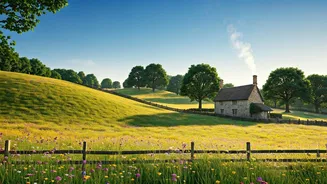
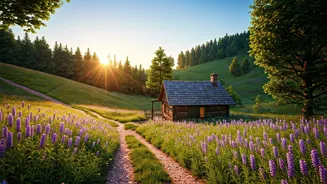
Lucy Maud Montgomery's "Anne of Green Gables" invites readers to the idyllic setting of Prince Edward Island. This beloved narrative centers on Anne Shirley,
an imaginative orphan, whose vibrant spirit and unwavering optimism bring life and colour to the rolling hills and quiet village of Avonlea. The story beautifully illustrates themes of finding one's place, the power of friendship, and the sheer delight that can be found in the simple wonders of the natural world. Through Anne's eyes, the reader experiences the profound sense of belonging that blossoms in a supportive rural community, making it a timeless exploration of childhood and discovery against a picturesque backdrop. The novel celebrates the enduring magic of rural settings as a catalyst for personal growth and happiness.
Satirical Rural Life
Stella Gibbons' "Cold Comfort Farm" offers a delightfully witty and satirical look at life in the English countryside. The story follows Flora Poste, a sensible young woman who, after being orphaned, decides to live with her eccentric relatives at the bleak and foreboding Cold Comfort Farm. Gibbons expertly skewers rural stereotypes with sharp humour, exaggerating the peculiarities of the Starkadder family and their dramatically bleak existence. Despite the comedic exaggeration, the novel also subtly celebrates the unique, if unconventional, charm of rural living and the power of a determined outsider to bring order and a touch of modern sensibility to a deeply entrenched, old-fashioned way of life. It’s a humorous yet insightful portrayal of pastoral clichés.
Wessex's Rural Tapestry
Thomas Hardy's "Far from the Madding Crowd" provides a rich and detailed depiction of agrarian life in his fictional region of Wessex. The narrative primarily focuses on Bathsheba Everdene, a strong-willed and independent woman navigating love, societal expectations, and the demanding realities of managing a farm. Hardy masterfully weaves a story of romance, personal autonomy, and the often-harsh economic conditions faced by rural communities. The changing seasons and the rhythms of farm labour serve as a powerful backdrop to the characters' emotional journeys and relationships, highlighting the profound connection between people and the land they cultivate. It's a classic exploration of rural existence and its inherent challenges.
Healing Moors and Gardens
Frances Hodgson Burnett's "The Secret Garden" unfolds on the expansive and often lonely Yorkshire moors, a setting that becomes instrumental in the story's theme of renewal. The novel tells the tale of Mary Lennox, a neglected and unloved girl sent to live with her reclusive uncle. Through her discovery of a hidden, overgrown garden, Mary finds a path to healing, both for herself and for others, particularly her invalid cousin Colin. The wild beauty of the moors and the patient cultivation of the secret garden act as powerful metaphors for emotional recovery and personal transformation. Nature is portrayed as a vital force, capable of nurturing life, growth, and ultimately, profound joy and connection.
Marshland Resilience
Delia Owens' "Where the Crawdads Sing" transports readers to the isolated marshlands of North Carolina, a unique and often misunderstood environment. The story follows Kya Clark, known as the "Marsh Girl," who grows up in solitude, deeply connected to the natural world around her. The novel beautifully articulates themes of isolation, survival, and the remarkable resilience of the human spirit when intertwined with the wilderness. Owens vividly captures the sensory details of the marsh, portraying it not just as a setting but as a character in its own right, providing Kya with solace, education, and a profound sense of belonging. It's a poignant narrative of a woman finding her strength in nature's embrace.
Wild Moors, Intense Love
Emily Brontë's "Wuthering Heights" is set against the dramatic and untamed Yorkshire moors, a landscape as wild and tempestuous as the emotions it contains. This intense novel tells the story of Heathcliff and Catherine Earnshaw, whose passionate and destructive love affair is deeply intertwined with the rugged, windswept environment. The stark beauty and desolate grandeur of the moors serve as a powerful, almost primal, backdrop to the unfolding tragedy and romance. Brontë uses the raw power of nature to amplify the characters' tumultuous feelings and the dark, brooding atmosphere of the story, making the countryside an integral element of its emotional intensity and Gothic allure.