
Choosing the Right Ginger
The journey starts with selecting the right ginger. Opt for fresh, plump ginger rhizomes – the knobby, underground stems – from a local market or a trusted
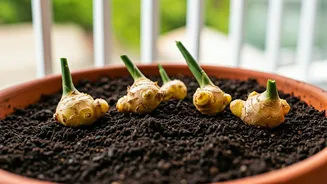
source. Avoid those that appear dry or shriveled, as these might not sprout readily. Look for rhizomes with several 'eyes,' or growth buds; these are crucial for new shoots to emerge. You can also purchase organic ginger rhizomes as they are often treated with fewer chemicals that might hinder growth. When choosing, consider the variety. While any ginger can be grown in pots, some types might be better suited for your climate. Select a variety that is known for its flavour and yield.
Perfect Potting Mix Matters
Next, focus on your potting mix. Ginger needs well-draining soil to prevent root rot, which is a common problem in potted plants. A good mix includes a blend of potting soil, compost, and perlite or vermiculite. Potting soil provides the structure, compost offers nutrients, and perlite/vermiculite ensures good drainage and aeration. You can create your own mix by combining equal parts of these components. Alternatively, you can purchase a pre-mixed potting soil that is designed for vegetables or general container gardening. Ensure the pH level of your soil is slightly acidic to neutral (6.0 to 7.0), as ginger thrives in this range. A soil test kit can help determine if adjustments are needed.
Planting Your Ginger
Now, it's time to plant. Choose a pot that is at least 12 inches (30 cm) wide and deep, as ginger rhizomes spread horizontally. Ensure the pot has drainage holes at the bottom to prevent waterlogging. Fill the pot with your prepared potting mix. Plant the ginger rhizome horizontally, with the eyes facing upwards. Bury the rhizome about 2-4 inches (5-10 cm) below the soil surface. Space multiple rhizomes about 6-8 inches (15-20 cm) apart if you're planting more than one in the same pot. Water the soil thoroughly after planting, ensuring it's evenly moist but not waterlogged. Avoid overwatering at this initial stage. Keep the pot in a warm location, ideally with partial shade, as ginger prefers indirect sunlight, especially during the hottest parts of the day.
Watering and Feeding
Proper watering is key to healthy ginger plants. Keep the soil consistently moist but never soggy. Water when the top inch of soil feels dry to the touch. The frequency of watering will depend on the climate and the pot's exposure to sunlight, so monitor the soil regularly. During the growing season (spring and summer), ginger benefits from regular feeding. Use a balanced liquid fertilizer diluted to half strength every 2-4 weeks. Alternatively, you can incorporate a slow-release granular fertilizer into the soil at the beginning of the growing season. Avoid over-fertilizing, as this can lead to excessive foliage growth at the expense of rhizome development. Signs of overwatering or underwatering include yellowing leaves or stunted growth, which should be immediately addressed.
Sunlight and Temperature
Ginger thrives in warm environments, making it ideal for balconies in most Indian climates. Place your potted ginger in a location that receives partial shade or indirect sunlight. Direct, intense sunlight can scorch the leaves, while too little light can hinder growth. Aim for at least 3-4 hours of sunlight daily. Ginger prefers temperatures between 20-35°C (68-95°F). Protect the plants from frost, as ginger is sensitive to cold. If you live in an area with cold winters, move the pots indoors or to a protected area during the colder months. Maintaining the correct temperature and light exposure will ensure robust growth and a plentiful harvest.
Pest and Disease Control
While relatively pest-resistant, ginger plants can occasionally encounter problems. Common pests include spider mites, aphids, and scale insects. Inspect your plants regularly for any signs of infestation, such as small webs, tiny insects, or discolored leaves. Treat infestations promptly using organic pest control methods. For example, you can spray the plants with insecticidal soap or neem oil. Avoid using harsh chemicals that could harm the plant. Diseases like root rot can occur if the soil is consistently waterlogged. Ensure proper drainage to prevent this. If root rot occurs, remove the affected rhizomes and repot the healthy ones in fresh soil. Maintain good air circulation around the plants to reduce the risk of fungal diseases.
Harvesting Your Ginger
The time to harvest your ginger depends on how you plan to use it. For tender, young ginger, you can begin harvesting after about 4-5 months, when the leaves start to turn yellow. Gently dig around the edges of the pot to locate the rhizomes and carefully remove a portion without disturbing the entire plant. For mature ginger, wait until the plant is about 8-10 months old, when the leaves have largely died back. At this point, the rhizomes will be more mature and flavorful. Carefully lift the entire plant from the pot, gently brushing away the soil to expose the rhizomes. Cut off the leaves and stems, and rinse the rhizomes thoroughly under running water to remove any remaining soil. Properly harvested ginger can be stored for several weeks in the refrigerator or even longer when properly preserved.