

The Science Behind Ghee
Ghee, often dismissed as a simple kitchen fat, is revealing its impressive dermatological potential through a closer look at its molecular composition.
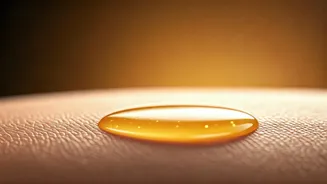
Far from being just a moisturizer, pure ghee, especially from grass-fed sources, acts as a rich source of beneficial lipids that are highly compatible with our skin's natural structure. The key ingredient driving these benefits is Butyric Acid, a short-chain fatty acid renowned for its potent anti-inflammatory properties. When applied topically, it helps to calm down localized redness and irritation, offering significant relief for conditions like eczema, mild rosacea, and general skin flare-ups. Additionally, ghee is packed with Conjugated Linoleic Acid (CLA) and fat-soluble vitamins, including Vitamin E and Vitamin A. Vitamin E combats free radical damage caused by UV radiation, which can lead to premature aging and collagen breakdown. Vitamin A plays a crucial role in supporting the maturation of skin cells, contributing to a healthier and more robust outer skin layer. This combination of fatty acids and vitamins transforms ghee into a powerful, bio-available skincare nutrient cocktail.
Fortifying the Skin Barrier
For individuals who spend time in dry, air-conditioned environments, the skin's barrier function often suffers, leading to a compromised stratum corneum and increased water loss. Unlike synthetic emollients like silicones or petroleum-based products, which tend to form occlusive layers on the skin's surface, ghee integrates differently. Its lipid profile closely resembles that of human sebum, allowing it to penetrate the skin's natural lipid matrix more effectively. By doing so, ghee actively replenishes depleted lipids, reinforcing the skin's protective barrier and significantly reducing transepidermal water loss (TEWL). This results in deep, structural hydration that feels natural and breathable, rather than heavy or suffocating. Furthermore, the moist micro-environment created by ghee aids in accelerating tissue regeneration, making it an excellent aid for the faster healing of minor cuts, abrasions, and blemishes by providing a protective lipid seal.
The Magic of Washed Ghee
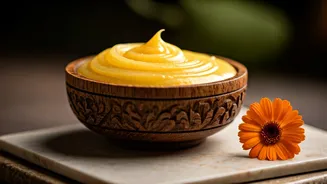
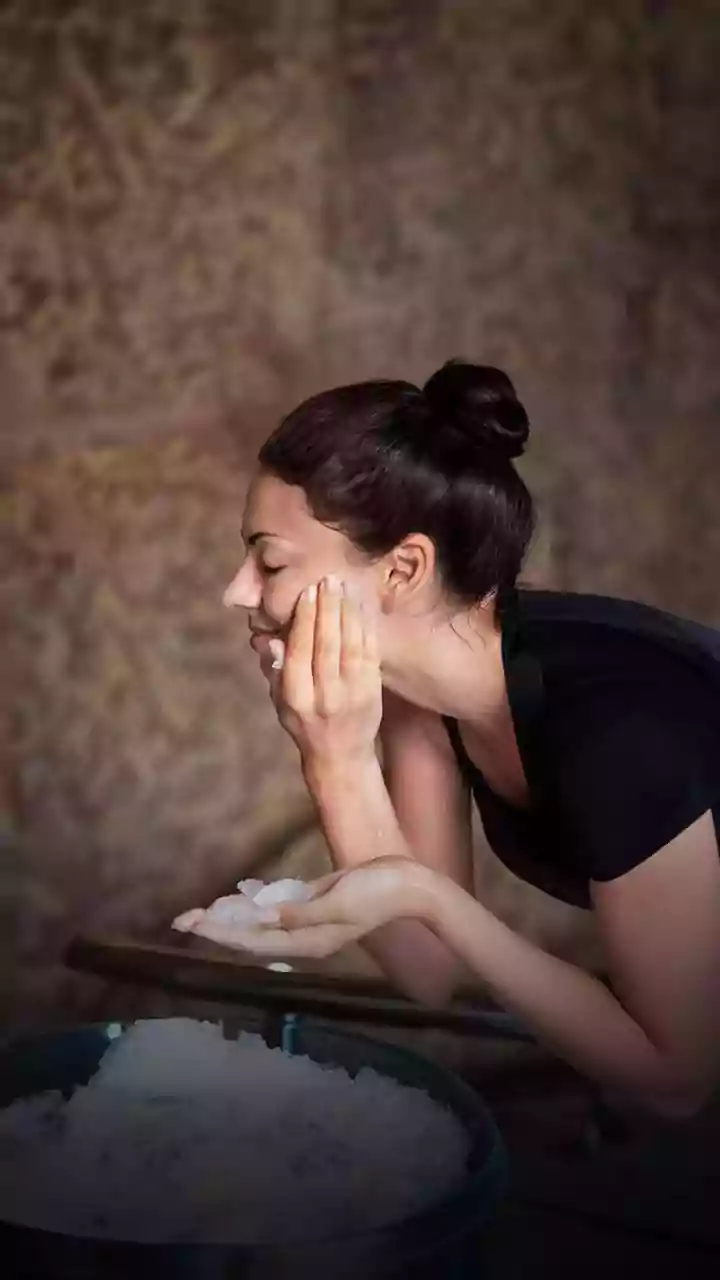
While the prospect of applying traditional ghee might raise concerns about its scent and texture, a refined version known as Shata Dhauta Ghrita, or washed ghee, offers a solution. This traditional Ayurvedic preparation involves an extensive process of washing ghee with purified, cold water and agitating it vigorously, often in a copper vessel, for up to 100 cycles. Scientifically, this mechanical action leads to the hydrolysis of complex lipids, breaking them down into simpler fatty acids and glycerol. The transformation is remarkable: the greasy, dense texture is completely eliminated, yielding an odorless, exceptionally lightweight mousse-like substance. This refined 'molecular ghee' possesses a significantly enhanced ability to penetrate deeper into the dermal layers. Critically, its comedogenic rating is dramatically reduced, making it a safer and more versatile option for a wider array of skin types, even those prone to clogged pores.
Practical Ghee Application
Before incorporating ghee into your skincare routine, it's crucial to understand its practical application and limitations, distinguishing between established benefits and popular myths. Raw, unwashed ghee is quite dense and can exacerbate acne or oily skin by trapping sebum and dead skin cells. Therefore, it is primarily recommended for individuals with severely dry or xerosis-prone skin. Regarding results, immediate moisturization is noticeable, but benefits like improved skin tone and reduced hyperpigmentation occur over time, aligning with the skin's natural 28-day renewal cycle; consistency is key. Finally, the source of your ghee is paramount. Standard ghee from grain-fed cows contains lower concentrations of beneficial compounds. For the full clinical impact of butyrate and omega-3 fatty acids, opt exclusively for pure, grass-fed A2 ghee. This ensures you are harnessing the true power of this ancient ingredient, validated by modern science.