
Idli: South Indian Staple
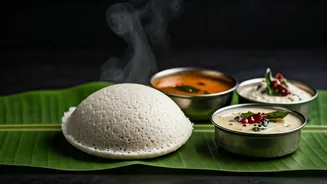
Idli, a South Indian staple, is a steamed rice cake that is incredibly popular across the country. The preparation involves fermenting a batter of rice and
urad dal (black lentils), which contributes to its light and fluffy texture. The fermentation process is not just for texture; it also aids in digestion, making idli a healthy choice. Served traditionally with sambar (a lentil-based vegetable stew) and coconut chutney, idli is a versatile breakfast option. It can be paired with various chutneys and even enjoyed with podi (a dry spice powder). The simplicity of idli makes it a breakfast favorite, enjoyed by people of all ages and backgrounds. This dish is not just a food item; it’s an integral part of South Indian culture, often served during festivals and special occasions.
Dhokla: Gujarati Delight
Dhokla, a beloved Gujarati snack, is a steamed cake made from fermented batter, often incorporating a blend of gram flour (besan), semolina, and spices. The fermentation process is crucial for achieving its characteristic airy texture and slightly tangy flavor. The batter is seasoned and then steamed until it becomes light and spongy. Dhokla is typically tempered with mustard seeds, green chilies, and curry leaves in hot oil, enhancing its taste and aroma. It's often garnished with fresh coriander and served with a sweet and tangy chutney. This dish is known for its versatility, with variations like khatta dhokla and rava dhokla adding more variety to the recipe. Dhokla is a popular choice for breakfast, and it has won hearts across India for its delicious taste and texture.
Idiyappam: String Hoppers
Idiyappam, also known as string hoppers, is a popular breakfast dish, especially in Kerala and Tamil Nadu. It is made from rice flour, which is pressed into noodle-like strands and then steamed. The simplicity of the ingredients allows the natural flavor of the rice to shine. Idiyappam has a soft and delicate texture, often served with coconut milk, vegetable stews, or egg curry. Variations include adding spices or flavors to the rice flour batter. This dish is a light and nutritious choice, suitable for all ages. The pairing of idiyappam with different curries makes it an ideal option for enjoying a complete meal with different flavor profiles, textures, and spices.
Modak: Maharashtrian Sweet
Modak, a sweet dumpling, holds a special significance in Maharashtra, especially during the festival of Ganesh Chaturthi. The outer layer is typically made of rice flour or wheat flour, and the filling is a mixture of grated coconut and jaggery (or sugar), flavored with cardamom and other spices. The traditional method involves steaming the modaks until the outer layer is soft and the filling is warm and melty. Modaks can also be deep-fried or steamed in a variety of other ways. This dish represents prosperity and good fortune, and is a treat that brings communities together. The delicate sweetness and unique shape of the modak make it a favorite among sweets-lovers during the festive season and year-round.
Puttu: Kerala's Breakfast
Puttu is a traditional breakfast dish from Kerala, prepared by steaming layers of coarsely ground rice flour and grated coconut in a cylindrical mold. This simple process creates a moist and flavorful dish with a unique texture. Puttu is usually served with kadala curry (black chickpea curry), or banana. The combination of the slightly sweet coconut with the earthy flavors of the rice flour and curry creates a balanced and satisfying meal. The preparation varies slightly, depending on the region and preferences of the cook. It is a nutritious and filling breakfast option that is widely enjoyed throughout Kerala and beyond. This breakfast staple celebrates the essence of Kerala's cuisine, providing a heartwarming start to the day.
Khaman: Another Gujarati
Khaman, another Gujarati specialty, is a savory steamed cake made from gram flour (besan). The batter is fermented, seasoned with spices, and then steamed until it becomes fluffy and light. This dish is known for its bright yellow color and slightly tangy taste. After steaming, khaman is often tempered with mustard seeds, asafoetida, green chilies, and curry leaves, which enhances the flavors and adds a crunchy texture. It's typically garnished with coriander leaves and served with chutney. It's often enjoyed as a quick breakfast or snack, offering a delightful combination of flavors and textures. Khmana is widely available and a popular option in street food stalls and homes across Gujarat.
Vada: Savory Delight
Vada is a popular savory snack and breakfast item, enjoyed across various regions in India, especially in the South. Vada typically involves making a batter from urad dal (black gram), along with other spices, which is then shaped into a donut and deep-fried or steamed. The steaming process, however, presents a healthier alternative. Steamed vada retains the same flavorful profile as the fried version, but it is much lighter. These are often served with sambar and chutney, making it a well-rounded and satisfying breakfast. Vadas offer a satisfying crunch on the outside and a soft, fluffy interior. It is an amazing example of Indian street food, enjoyed by people from all walks of life.
Momo: Himalayan Influences
Momos, popular in the Himalayan regions, have gained traction in other parts of India. These steamed dumplings are filled with a variety of ingredients, including vegetables, meat, or cheese, seasoned with flavorful spices. The dough is typically made from flour and water, and the dumplings are steamed until cooked thoroughly. The fillings can be as diverse as the regions they are found in, and the accompanying sauces are equally variable. Momos are eaten with a spicy chili sauce or chutney, to provide an added dimension of flavor. Momos provide a warm and fulfilling meal, popular for their simplicity and taste. They offer a unique blend of flavors and textures, making them a well-loved breakfast and snack choice.
Pesarattu: Andhra's Green Treat
Pesarattu, originating from Andhra Pradesh, is a savory pancake made from green gram (moong dal) batter. The batter is fermented and then spread thinly on a hot griddle and cooked till it is crispy. Although Pesarattu is generally pan-fried, steaming it offers a healthier option. The dish is usually served with ginger-garlic chutney and upma (a savory semolina porridge). The use of green gram in Pesarattu makes it rich in protein and nutrients, making it a healthy and filling breakfast option. The dish's crispy texture and the savory chutney combine perfectly for a flavor-packed experience. It is a nutritious alternative to traditional breakfast options and is widely liked for its taste and health benefits.
Bhaap Pittha: Assam's Specialty
Bhaap Pittha, a traditional Assamese delicacy, is a steamed rice cake often prepared during festive occasions. It is made from a batter of rice flour and jaggery, which is then steamed in a special container. The unique steaming process imparts a soft and fluffy texture to the pittha, while the use of jaggery adds a natural sweetness and distinct flavor. Bhaap Pittha is often enjoyed as a snack, as part of a meal, or a sweet treat. The dish represents the rich culinary heritage of Assam and is particularly enjoyed during the Magh Bihu festival, signifying celebrations and togetherness. The dish's straightforward preparation and delicious taste make it a popular choice for families and communities.