



The Stiff Towel Conundrum
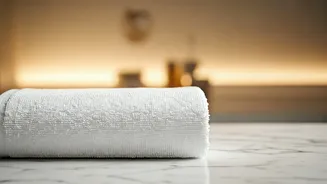
Ever reach for a towel and get that disappointing, paper-like sensation? It's a common frustration that often leads us to blame the cotton's quality or age.
However, the real culprit is frequently our drying routine. When we aim for bone-dry towels, we inadvertently alter the cotton fibers at a molecular level. The key to a towel's plushness and elasticity lies in maintaining a precise level of moisture. Ideally, cotton threads should be flexible and resilient. Excessive drying, however, can damage this structure, leading to hardened, rigid fibers that feel harsh against the skin. Understanding this fundamental principle is the first step to preserving your expensive linens and restoring their original luxurious feel without needing professional intervention.
Why Overdrying Harms
The irony of stiff towels is that the very act of making them completely dry is what causes the problem. Scientific principles illustrate that even a minimal amount of moisture plays a crucial role in keeping cotton fibers soft and pliable. Research indicates that water acts as a natural plasticizer, enhancing the mobility of molecular chains within the fabric. When a towel is thoroughly dried, all water molecules evaporate, causing the fibers to become tightly packed and rigid. Without this residual moisture, the fibers lose their ability to move freely, becoming straight, stiff, and ultimately harsh. Studies confirm that as the hydration level of materials decreases, they tend to harden significantly. In extreme cases, this hardening can become irreversible, permanently compromising the towel's texture.
Embrace 'Just Dried' Softness
To keep your towels feeling wonderfully soft, avoid the temptation to dry them completely. Instead, aim for a 'just dried' state. Many modern dryers are equipped with moisture sensors that automatically shut off the cycle once a certain humidity level is reached; utilize this feature. If your dryer lacks this technology, manually stop the drying cycle a few minutes early – approximately ten minutes before it would normally finish. This brief period allows any residual moisture to evaporate gradually, preventing the fibers from becoming overly brittle and stiff. This simple adjustment is far more effective than continued tumbling in high heat.
Hybrid Line Drying Strategy
For those committed to line drying for environmental reasons, a hybrid approach can offer a good compromise. Begin by spinning your towels in a clothes dryer for about five minutes on a no-heat setting. This mechanical agitation helps to break down the strong bonds that can form between fibers when they dry purely in the air. After this initial tumble, you can proceed with line drying. Additionally, incorporating fabric softener can further mitigate the abrasive feel often associated with air-dried towels, as suggested by acoustic analysis studies comparing fabric textures.
Washer Choice and Load
The type of washing machine you use can also impact your towels' softness. Research based on sound spectrum analysis suggests that front-loading machines might be somewhat harsher on towels compared to top-loaders, largely due to their washing action. However, this potential roughness can be easily counteracted. A critical factor is to avoid overloading your washing machine. When a machine is too full, it struggles to rinse thoroughly, potentially leaving behind detergent residue that can contribute to stiffness and a rough texture on your towels.