






Light's Biological Blueprint
Our bodies possess an internal clock, the circadian system, which is intrinsically tied to light. Chronobiology research illuminates how changes in light intensity
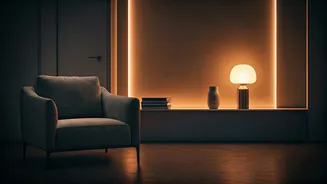
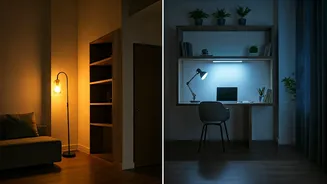
and colour temperature orchestrate our sleep-wake cycles, alertness levels, hormone production, and cognitive functions. For instance, bright, cool light in the morning aids concentration, while softer, warmer light in the evening signals the body to wind down for rest. When our indoor environments fail to respect these natural rhythms, it can manifest as persistent fatigue, disrupted sleep patterns, and elevated stress levels. This isn't merely a theoretical concern; it's a growing reality for many urban dwellers who report feeling perpetually tired despite getting sufficient sleep duration. The modern Indian lifestyle, often spent predominantly indoors, makes deliberate lighting choices a fundamental aspect of designing spaces that support our physiological needs and emotional states.
Calming Light, Calmer Minds
Light wields a remarkable influence on our emotions, extending beyond mere visibility. A striking example comes from Japan, where the East Japan Railway Company implemented blue LED lights at platform ends on the Yamanote Line. This initiative, aimed at reducing suicide incidents, was followed by a significant decrease: a peer-reviewed study observed an approximate 84% drop in platform suicides over ten years across 71 stations. Researchers attribute this effect to the serene, mood-regulating properties of blue light wavelengths, suggesting that individuals did not simply relocate their attempts to other stations. This intervention serves as a potent illustration that light's capabilities transcend functional illumination, demonstrating its capacity to positively influence human emotions, even in profoundly vulnerable moments. Similar strategies have since been adopted in transit systems worldwide, underscoring light's powerful psychological impact.
The Shift to Well-being
The market is undergoing a significant transformation, moving from lighting solutions focused solely on utility to those prioritizing human well-being, often termed 'human-centric lighting.' In India, particularly in premium residential, hospitality, and commercial sectors, clients are increasingly vocal about their lighting needs, with architects integrating circadian principles from the outset. Developers recognize that superior lighting quality directly enhances perceived luxury and occupant well-being. This shift is characterized by several key design evolutions: the adoption of layered lighting schemes over single-source illumination, a greater emphasis on indirect lighting and fixtures designed to minimize glare, the implementation of tunable white systems that adapt to the time of day, and scene-based controls enabling multiple uses within a single space. The goal isn't to make spaces dimmer or more dramatic, but to ensure they are physiologically and visually appropriate for human comfort and performance.
Design Intelligence in Lighting
The availability of advanced technology, including highly efficient LEDs, sophisticated optics, and intelligent control systems, means the tools for creating responsive lighting environments are readily accessible. However, the true challenge often lies in the thoughtful application of this technology. Human-centric lighting demands meticulous technical execution, including precise lux planning, high colour rendering capabilities, effective glare management, and careful fixture placement. Without this level of rigor, even high-end lighting installations can fall short in delivering optimal comfort. Light is increasingly viewed as a vital biological nutrient, as crucial as sleep or nutrition. Tunable LED systems are now capable of dynamically adjusting colour temperature and brightness throughout the day, promoting alertness in the morning and supporting melatonin production in the evening. With the integration of the Internet of Things (IoT), lighting systems can autonomously respond to occupancy, ambient daylight levels, and user behaviours. Furthermore, full-spectrum systems designed to mimic natural sunlight are being implemented in healthcare and office settings to alleviate conditions like Seasonal Affective Disorder, yielding measurable improvements in mood and cognitive function. The future of lighting lies in harmonizing design intelligence, technical precision, and contextual planning to create environments that genuinely elevate the human experience.