







Flame-Free Cooking
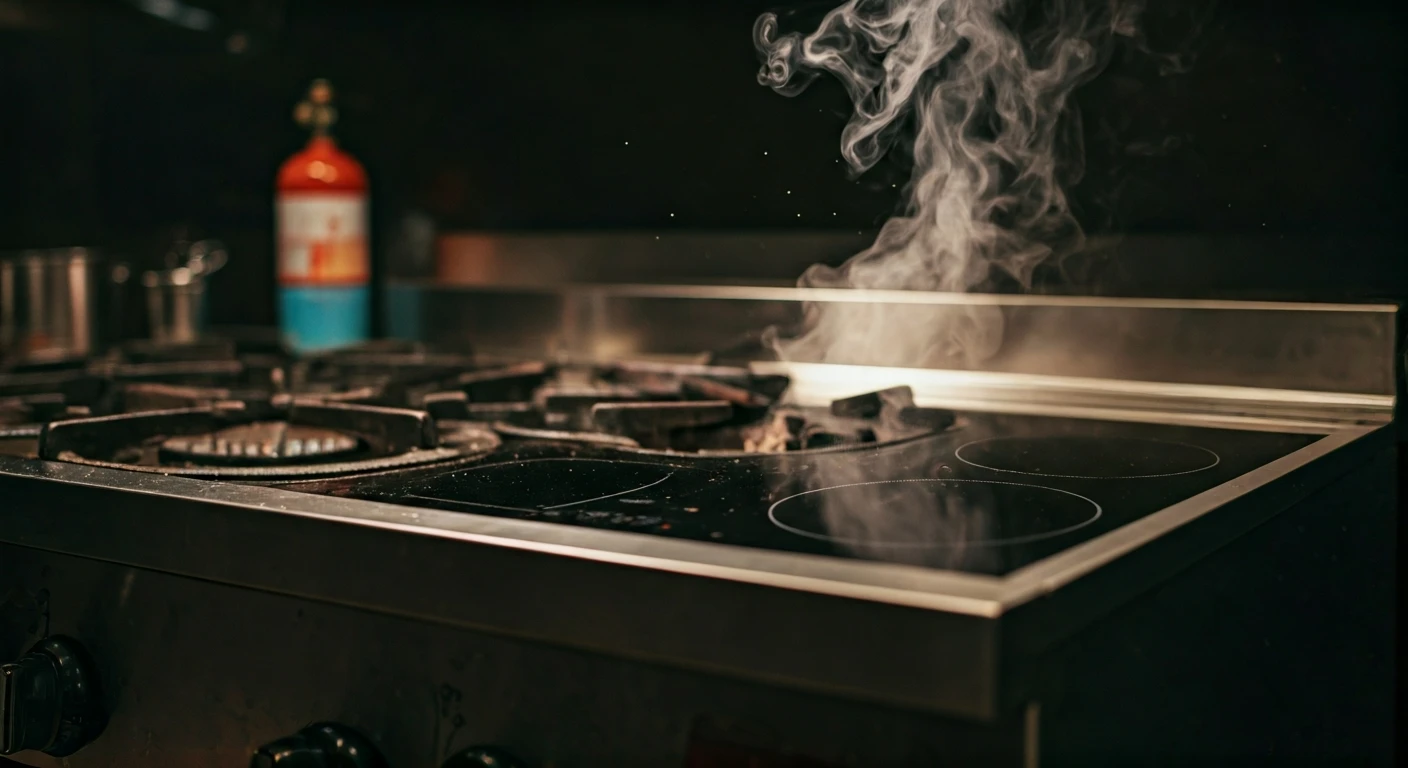
Transitioning from gas stoves means letting go of visual flame cues for heat control. Induction cooktops rely on numerical or digital settings, which can
initially feel abstract. Instead of focusing on a dial or setting, pay closer attention to the actual cooking process. Listen for the sizzle of ingredients, observe the texture changes in your food, and note the aroma of spices as they heat up. These sensory cues become your new indicators of temperature, providing a more nuanced understanding of heat levels and allowing for precise cooking without the need for a visible flame. Mastering this shift requires patience and a focus on the food itself rather than the abstract settings.
Silent Operation
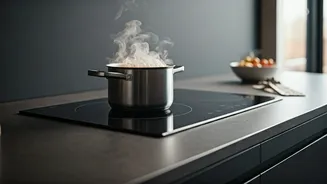
The near-silent operation of induction cooktops can be a surprising departure from the familiar sounds of gas burners or even electric coils. Some users might initially question if the appliance is functioning correctly due to the lack of audible feedback. While generally quiet, certain cookware, especially when used on higher power settings, may produce a subtle humming or buzzing sound. This phenomenon arises from the magnetic interaction between the pot or pan and the cooktop surface. Often, simply reducing the heat setting can mitigate this noise. Understanding that this sound is a normal part of the induction process can alleviate initial concerns and allow you to appreciate the quiet efficiency of your cooktop.
Rapid Heat Adjustment
One of the most significant differences in induction cooking is the incredibly swift response to heat adjustments. Unlike gas or electric stoves, where temperature changes take time to manifest, induction cooktops alter the pan's heat almost instantaneously. This means a pot brought to a rapid boil can be reduced to a gentle simmer in mere seconds. While this speed offers impressive control, beginners might find that food cooks much faster than anticipated, potentially leading to overcooking. It is advisable to start with moderate heat settings and gradually increase them as you become more accustomed to the cooktop's responsiveness. This deliberate approach helps prevent common mistakes and allows for a smoother integration into your cooking routine.
Induction-Compatible Cookware
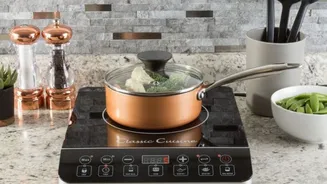
The effectiveness of induction cooking hinges on magnetism, meaning not all cookware is suitable. To heat properly on an induction surface, pots and pans must possess a magnetic base. Traditional choices like stainless steel, cast iron, and enamel-coated steel cookware generally perform well. Conversely, lightweight materials such as aluminum, glass, and ceramic often require a specialized magnetic layer to function. Opting for heavier pans is also recommended, as they tend to distribute heat more uniformly and react more predictably to temperature modifications. Additionally, ensure the base of your cookware is appropriately sized for the induction zone to maximize heat transfer efficiency.
Adapting Cooking Habits
Induction cooktops heat up very quickly, so it's crucial to adjust your habits to prevent overheating and burning food. A common mistake is preheating an empty pan on high heat; instead, it's safer to start with a lower setting and add ingredients first, increasing the temperature gradually only if necessary. Some dishes benefit from slightly lower cooking temperatures than you might be accustomed to with gas. Furthermore, using lids on pots can significantly accelerate cooking by trapping heat and steam. Embracing these minor adjustments, like ensuring ingredients are prepped before turning on the cooktop, will lead to more consistent and successful culinary outcomes.