



Ethical Claims Scrutinized
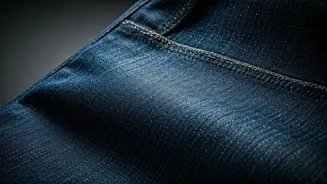
A significant legal challenge has emerged concerning a prominent denim brand, accused of making misleading statements about its commitment to ethical labor
practices. The lawsuit, filed by an international labor rights organization and several consumers, centers on allegations that the company's marketing promoted fair worker conditions, yet failed to address reported abuses within its supply chain. Specifically, a Turkish factory, a sole supplier for the brand, is at the heart of the dispute, where workers allegedly faced violence and subsequent layoffs after protesting for better conditions in 2023. This case brings to the forefront the issue of 'social washing' in the fashion industry, where declarations of responsibility might be used more as a marketing tactic than as a reflection of genuine on-the-ground practices, raising critical questions for consumers about the authenticity of brand claims regarding ethical production and worker welfare.
Innovations in Textiles
A substantial investment is being channeled into pioneering textile and material research through a significant grant of $34 million from a well-known technology and e-commerce entity's Earth Fund. This initiative aims to accelerate the development of environmentally conscious solutions by bringing together experts from various scientific and research fields across the United States. The focus is on creating novel fabrics that mimic natural materials like cotton, silk, and rayon, but are produced using innovative methods such as bacterial fermentation and composting. Additionally, advancements are being made in engineering colored cotton fibers. Several esteemed academic institutions, including Columbia University in collaboration with the Fashion Institute of Technology, the University of California, and The Cotton Foundation, are among the recipients of this vital funding, poised to drive forward the next generation of sustainable fashion materials.
Championing Heritage Crafts
The Good Earth Heritage Foundation, established in 2021 to foster self-reliance and enduring legacies for artisan communities, has made significant strides in preserving endangered craft traditions. Over the past year, the foundation has meticulously documented various vulnerable crafts, with active projects in Srinagar, Kutch, and Karnataka. These initiatives not only facilitate crucial research but also generate employment opportunities. In Srinagar, the Sakhtasaaz Collective has successfully integrated 20 female artisans into its traditional papier-mâché craft, expanding its reach. Kutch is witnessing the revival of the nearly extinct Bela block printing through an archiving project, supporting the sole practitioner, Mansukh Bhai Khatri, in developing a new collection. Meanwhile, the Khowdi Project in Karnataka's Kalaburagi is dedicated to safeguarding traditional hand-quilting, empowering over 200 women craftspersons with institutional support and enhancing their livelihoods. The foundation plans to continue this work, expanding research into Batik dyeing and _sozni_ embroidery by 2026.
Embracing Circular Fashion
A new venture is set to redefine fashion with a commitment to circularity, launching on May 1st. This brand, founded by a mother-son design duo, emphasizes a no-waste philosophy in its creations. Their debut collection, featuring undyed recycled cotton and linen, incorporates meticulously reconstructed vintage craft pieces into contemporary separates. While their mainline brand is celebrated for its textile expertise, this new initiative creatively upcycles remnants of traditional Indian weaves like Ikat, Patola, and _bandhani_ as appliqué detailing. Hand embroidery adorns garments using natural, undyed yarns from tussar, _eri_, and nettle fibers. Some pieces even showcase eco-printing techniques utilizing fallen leaves. By prioritizing biodegradable materials, reclaimed elements, and timeless silhouettes, the brand aims to champion material integrity and the extended lifespan of clothing, offering a sustainable alternative to fast fashion consumption.
Reviving Ancient Weaves
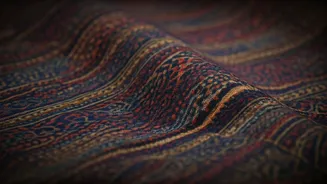
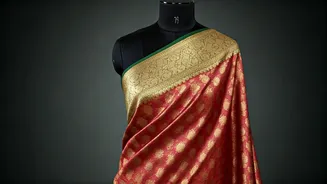
A notable revival of an ancient Indian weaving tradition, once believed lost, is being brought back to the forefront through a specialized incubator program. This program, managed by a non-profit organization based in Charleston, assists artisan groups in transforming endangered crafts into sustainable, market-ready enterprises. A particularly striking example is the Himroo weaving technique, which has been painstakingly redeveloped through extensive research and close collaboration with master weavers, coupled with contemporary product design. The newly launched capsule collection showcases this revived craft through exquisite silk tie-dye toppers accented with Himroo cuffs, alongside elegant Jamdani scarves, handcrafted belts, and flowing silk dresses, demonstrating the enduring beauty and viability of this historical art form in modern fashion.
Cost Per Wear Impact
Recent research from the University of Bath and Cambridge Judge Business School suggests a simple yet effective strategy to steer consumers away from the allure of fast fashion. Published in the journal _Psychology & Marketing_, their study reveals that displaying a garment's 'cost per wear' (CPW) alongside its retail price can significantly influence purchasing decisions, encouraging shoppers to opt for higher-quality, durable clothing over inexpensive, disposable items. Through six online experiments, the findings indicate that CPW reframes sustainability not solely as an ethical concern, but also as a practical economic consideration. As highlighted by Dr. Lisa Eckmann of the Bath Retail Lab, this approach makes 'cheap fast fashion suddenly appear more expensive due to its higher cost per wear.' The research underscores the potential of behavioral nudges, complementing ethical appeals, in shifting consumer habits towards more responsible fashion consumption patterns.