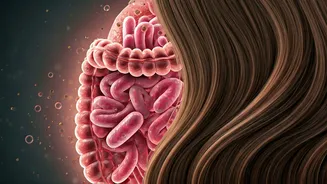








Digestive Health Decline
Recent extensive data analysis from Traya Health, examining over 1.6 lakh Indian men across ten major states – Maharashtra, Uttar Pradesh, Delhi NCR, Telangana,
Bihar, Rajasthan, Madhya Pradesh, West Bengal, Gujarat, and Tamil Nadu – between December 2024 and December 2025, points to a concerning trend of deteriorating gut health. A key indicator used in this study was the frequency of constipation, with a significant majority of men reporting poorer digestive function in 2025 compared to the previous year. This decline is not isolated to specific regions but appears to be a widespread national issue, particularly pronounced in India's most populous urban and economically vibrant areas. For instance, Telangana saw the most significant drop in men reporting little to no constipation, approximately 4.10 percentage points, closely followed by Rajasthan at 3.30 percentage points and Delhi NCR at 2.97 percentage points. Other states experiencing notable decreases in digestive comfort included Madhya Pradesh (2.30 pp), Gujarat (2.27 pp), and Bihar (2.00 pp). This shift indicates that many men are transitioning from experiencing regular digestive ease to struggling with chronic gut strain, a phenomenon that seems more closely tied to modern lifestyle factors than to geographical location or nutritional deficiencies.
Modern Lifestyle Factors
The study strongly suggests that contemporary lifestyle patterns are the primary drivers behind the worsening gut health observed across India, particularly affecting urban, educated, and economically active populations. The widespread availability of ultra-processed foods, often delivered rapidly through online platforms, contributes to less nutritious dietary choices. Coupled with this is the prevalence of irregular meal timings, a direct consequence of demanding work schedules and an 'always-on' culture that disrupts natural bodily rhythms. Furthermore, chronic under-hydration is becoming increasingly common, especially among working professionals who may not prioritize adequate fluid intake throughout their busy days. The rise of stress-related eating as a normalized coping mechanism also plays a significant role, further impacting digestive balance. These lifestyle shifts create an environment where the gut is constantly under duress, paving the way for potential health issues, including the surprising connection to hair loss.
Nutrient Absorption Failure
A compromised gut significantly impedes the body's ability to absorb essential nutrients crucial for robust hair growth. The gut's primary role includes the absorption of proteins, iron, zinc, and various B vitamins, all of which are fundamental building blocks for hair follicles. Hair itself is composed of approximately 90% keratin, a protein synthesized from amino acids. When the digestive system's functionality is compromised, whether due to inflammation, an imbalanced gut microbiome, or issues with digestive motility, these vital nutrients fail to reach the hair follicles in sufficient quantities. This deficiency directly impacts the structural integrity of hair, leading to weaker strands and a noticeable increase in shedding. The cycle of hair thinning and loss begins as the follicles do not receive the necessary resources to maintain healthy, resilient hair.
Inflammation and Hair Cycles
Beyond nutrient absorption, a struggling gut can also trigger widespread, low-grade systemic inflammation throughout the body. This chronic inflammation disrupts the delicate hair growth cycle, a complex process involving distinct phases. Under inflammatory stress, hair follicles may prematurely transition from the active growth phase (anagen) into the resting phase (telogen). This accelerated shift means that hair growth slows down significantly, while shedding increases. The visual consequence is a noticeable thinning of hair and a receding hairline, as the cycle of healthy hair production is disrupted. Treating hair loss effectively requires addressing these underlying internal imbalances, moving beyond superficial scalp treatments to tackle the root cause of systemic inflammation originating from gut dysfunction.