







Inflammation's Cognitive Toll
As we age, a natural increase in brain inflammation, termed "neuroinflammaging," often impairs cognitive functions like memory and learning. For years,
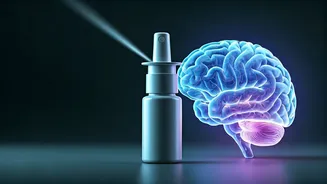
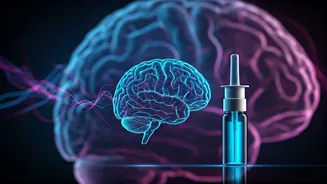
this cognitive decline was considered an irreversible consequence of aging. However, recent breakthroughs suggest that actively reducing this inflammation can significantly improve brain performance. Researchers at Texas A&M University have spearheaded the development of a novel nasal spray designed to deliver therapeutic agents directly to the brain, challenging the long-held belief that age-related cognitive deterioration is a permanent condition. This new approach aims to actively reverse the inflammatory processes that degrade brain function over time, paving the way for improved mental acuity in later life and potentially offering solutions for conditions beyond typical aging.
Therapeutic Vesicle Delivery
The core of this groundbreaking therapy lies in its use of extracellular vesicles, minuscule biological structures that function as natural delivery systems. These vesicles are engineered to carry microRNAs, vital molecules that regulate cellular activities. When administered via a nasal spray, these vesicles are uniquely positioned to bypass the brain's protective blood-brain barrier, reaching brain tissue directly. Upon arrival, they are absorbed by the brain's immune cells. Once inside, they work to suppress detrimental inflammatory pathways, specifically targeting systems like the NLRP3 inflammasome and the cGAS–STING pathway, which are heavily implicated in chronic inflammation associated with aging brains. Simultaneously, the therapy aids in restoring mitochondrial function, the cellular powerhouses responsible for energy production, thereby boosting the brain's capacity for information processing and retention.
Promising Trial Outcomes
Early experimental results from behavioral tests have yielded highly encouraging outcomes, indicating significant improvements in memory and awareness among subjects treated with the nasal spray. Participants demonstrated enhanced ability to recognize familiar objects and distinguish new ones, pointing to a tangible restoration of cognitive functions. A notable finding is the consistent efficacy across both male and female subjects, a uniformity that is not always observed in biomedical research. If these positive impacts translate to human trials, this nasal spray could offer a far more accessible and less invasive alternative to existing treatments for cognitive impairments. Furthermore, its potential application extends to aiding recovery from brain injuries or strokes, where inflammation plays a critical role.
Future of Brain Health
While further extensive studies are essential before this nasal spray can be widely adopted as a clinical treatment, this research marks a significant stride towards redefining brain aging. It shifts the paradigm from solely preventing cognitive decline to actively rejuvenating brain function, potentially enabling individuals to maintain sharp minds throughout their lives. The scientific community is increasingly moving towards a more dynamic understanding of aging, where its cognitive consequences are not seen as inevitable but as conditions that can be actively managed and even reversed. This evolving perspective opens exciting avenues for developing interventions that promote lifelong cognitive vitality, moving beyond the concept of irreversible degeneration towards proactive brain health enhancement.