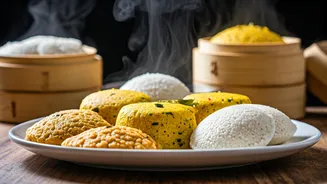

Idli: South Indian Staple
Idli, a South Indian breakfast staple, is a steamed savory cake made from fermented batter of rice and black lentils (urad dal). The fermentation process
gives idli its characteristic tangy flavor and soft, spongy texture. Typically, the batter is left to ferment for several hours, ideally overnight, in a warm environment. Then, it's poured into idli molds and steamed until cooked through. These soft, fluffy idlis are often served with sambar, a lentil-based vegetable stew, and coconut chutney, creating a perfect balance of flavors and textures. The dish is not only delicious but also easily digestible and a good source of carbohydrates and protein. Variations exist, with some recipes incorporating rava (semolina) or other ingredients to alter the texture and taste.
Dhokla: Gujarati Delight
Dhokla, a beloved Gujarati snack, is another steamed delicacy, typically made from fermented batter, often a mix of gram flour (besan), semolina (sooji), and sometimes rice. The batter is seasoned with spices like ginger, green chilies, and a pinch of asafoetida. It's then steamed until it becomes light and airy. After steaming, the dhokla is tempered with a mixture of oil, mustard seeds, and curry leaves, which enhances its flavor. Dhokla offers a delightful combination of sweet, sour, and savory tastes and is enjoyed throughout the day, including as a breakfast option. It is a light and healthy option, offering a good source of protein and carbohydrates, making it an excellent start to the day. Variations include different batters and toppings, like the use of green chilies, coriander, or grated coconut.
Khaman: Spongy Goodness
Similar to dhokla, Khaman is another popular Gujarati snack, primarily made from gram flour (besan). The preparation involves fermenting the batter with spices and sometimes fruit salt for a light and spongy texture. The batter is steamed until it rises and sets, resulting in a soft, fluffy cake. Khaman is known for its vibrant yellow color and porous texture, which is perfect for absorbing flavors. A tempering of mustard seeds, curry leaves, and green chilies is poured over the steamed cake, enhancing its taste. Often garnished with coriander leaves, it's served with chutney or as a standalone snack. Khaman offers a lighter alternative to deep-fried snacks, providing a good source of protein and essential nutrients from the gram flour. Many regional variations exist, adding diversity in flavors and textures.
Modak: Sweet Steamed Treat
Modak is a sweet dumpling, primarily associated with the Indian state of Maharashtra, traditionally prepared during the festival of Ganesh Chaturthi. The outer shell is made from rice flour or wheat flour dough, and the filling consists of freshly grated coconut and jaggery. The modaks are then steamed, giving them a soft and chewy texture. This sweet treat represents auspiciousness and prosperity, deeply rooted in Indian culture. Variations can involve different fillings, such as khoya or dry fruits. The process of making modak requires some skill; the dough must be handled carefully, and the filling should be well-proportioned to the outer covering. Modaks provide a delectable sweet experience, and the filling's coconut and jaggery content also offer nutritional benefits.
Puttu: Kerala’s Staple
Puttu, a breakfast staple from Kerala, is a cylindrical steamed dish made from coarsely ground rice flour or sometimes wheat flour or ragi. The rice flour is mixed with grated coconut and steamed in a special puttu steamer, layering the ingredients. Puttu is often served with kadala curry (black chickpea curry) or a side of grated coconut and banana. The combination of the fluffy puttu and the savory curry creates a balanced breakfast that's both filling and flavorful. Puttu is a simple yet satisfying dish, offering essential carbohydrates and fiber. The method of steaming ensures that it is easily digestible and healthier than fried alternatives. The preparation of puttu varies by region, sometimes including added spices or different types of flour.
Idiyappam: String Hoppers
Idiyappam, also known as string hoppers, is a breakfast item from South India and Sri Lanka. They are made from rice flour dough that is pressed into thin noodle-like strands and then steamed. The resulting dish has a delicate texture that pairs well with various accompaniments. Often eaten with stew or vegetable curries, idiyappam offers a light and versatile base for a flavorful breakfast. These string hoppers are steamed, preserving the nutrients and offering an easy-to-digest option, making them a good alternative to heavy, oily breakfast choices. Regional variations include different flours or spices, adding variety to the taste and texture.
Bati: Rajasthan’s Delight
Bati is a round, baked bread from Rajasthan. Though not directly steamed, it is closely associated with a steamed preparation known as 'bafla'. Bafla is prepared by first boiling the bati and then lightly steaming it or baking it. This method provides a soft texture inside while maintaining a slightly crispy exterior. Bati is usually dipped in ghee (clarified butter) and served with dal (lentils), creating a wholesome and rich breakfast experience. Bati-bafla is popular across Rajasthan and nearby states. The nutritional value is centered around the whole wheat, which offers essential fiber and nutrients. Bafla's unique texture makes it a comfort food, often enjoyed during festive occasions. The method of preparation ensures that the dish is both satisfying and keeps for long periods.
Momos: Himalayan Treat
Momos are steamed dumplings that originated in Tibet but are hugely popular in the Himalayan regions of India, especially in the northeast. These dumplings are made with a wheat flour or all-purpose flour dough and filled with minced meat (usually chicken, pork, or yak) or vegetables. They are steamed in a special steamer, giving them a soft and juicy texture. Momos are typically served with a spicy chutney, adding a burst of flavor. They are a beloved street food and breakfast item. Momos are relatively healthy when steamed, and the fillings can be tailored to be nutritious, filled with protein from the meat and essential nutrients from the vegetables. They have gained popularity across India and can be found in restaurants and food stalls.
Poha: Flattened Rice
Poha is a popular breakfast dish made from flattened rice, especially in Maharashtra, Madhya Pradesh, and other parts of India. The flattened rice is soaked briefly in water, then tempered with mustard seeds, onions, chilies, and often curry leaves. The mixture is then steamed for a few minutes to soften the rice. Poha is often seasoned with turmeric, sugar, and lemon juice for a tangy and flavorful taste. It can be served with sev, coriander, and other garnishes. Poha is a quick and easy breakfast option, providing carbohydrates and fiber. The light steaming process preserves nutrients, making it a healthy start to the day. Variations exist, from sweet to savory versions, demonstrating the dish’s versatility.
Pesarattu: Andhra’s Crepe
Pesarattu, a savory pancake from Andhra Pradesh, is made from a batter of green gram (moong dal) and is often served with upma. The green gram is soaked overnight, then ground into a smooth batter. The batter is then poured onto a hot griddle and cooked like a crepe. Pesarattu is usually thin and crispy, and sometimes it's stuffed with upma, creating a complete breakfast meal. This dish is rich in protein and fiber, making it a nutritious and filling option. Steaming is not the primary cooking method; however, it is a healthy option due to the use of moong dal as the key ingredient and minimal use of oil. Pesarattu exemplifies a wholesome breakfast and regional variations enhance its versatility.