




The Peril of Water
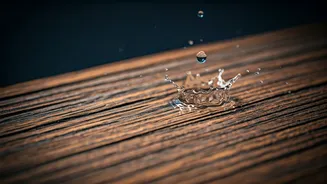
Many believe a 'squeaky clean' surface signifies good hygiene, but for wooden furniture, this often means trouble. Even after a seemingly quick dry, water
used during cleaning can seep deep into the wood's intricate, porous structure. Wood, unlike inanimate materials, remains a 'living' substance with a delicate relationship to moisture. When liquid penetrates its fibers, it initiates an internal journey, causing swelling and stress that can lead to irreparable damage, far beyond what any polish can fix. This infiltration begins its insidious work the moment water touches the surface, despite our perception of immediate dryness. The wood's natural pathways, once used for sap transport, become conduits for destructive moisture, leading to warping and weakening over time.
Wood's Inner Struggle
To grasp how water wreaks havoc, understanding wood's microscopic composition is key. Wood is composed of countless microscopic, tube-like structures that, in living trees, were responsible for transporting water and nutrients. These cellular structures persist even after the wood is processed into furniture. Research indicates that water within wood exists in two states: 'free water' residing in larger cavities and 'bound water' chemically bonded to the cell walls. Introducing excessive moisture causes these cell walls to absorb the bound water, leading to internal expansion. This expansion is often the culprit behind sticky drawers during humid seasons or subtle, unexplained curves appearing on tabletops after prolonged exposure to wet cleaning methods. The internal stretching and contracting from repeated wet-dry cycles exert immense pressure on wood fibers, inevitably causing them to bend, split, and weaken over time, a slow erosion of structural integrity.
Finishes: A False Sense
While varnished or waxed furniture might seem protected, these finishes offer only limited defense against regular water exposure. Their primary design is to combat occasional spills, not the constant presence of moisture from cleaning. Over time, even the most robust finishes develop microscopic cracks, creating entry points for water. Alarmingly, research reveals that while film-forming finishes excel at blocking liquid water, they are remarkably ineffective against water vapor. Worse still, if water infiltrates beneath the finish through even a tiny imperfection, the coating acts as a trap, preventing the moisture from evaporating. This trapped moisture can create an ideal breeding ground for decay-causing fungi. When wood's internal moisture content remains elevated above 20 percent for extended periods, fungi can initiate 'brown rot,' consuming the cellulose that provides wood its strength. By the time visible discoloration or a musty odor appears, the damage is often irreversible, highlighting the deceptive nature of finishes.
Gentle Cleaning Wisdom
Preserving your cherished wooden furniture demands a 'less is more' approach to cleaning. Experts recommend using a cloth that is only very slightly damp – it should feel cool to the touch without leaving any discernible water marks. This minimal moisture is sufficient to lift surface dust and grime without saturating the wood fibers. Immediately following this gentle wipe, employ a separate, dry, soft microfiber fabric to thoroughly dry the surface. This two-step process respects the wood's cellular equilibrium and accounts for the limitations of protective finishes. By adhering to these practices, you can effectively maintain the beauty and structural integrity of your wooden pieces, ensuring they remain pristine for years to come and avoiding the destructive consequences of excessive moisture.